c.curionodeThe Nobel Archive

1964 · Literature

Writing about freedom and responsibility

Sartre’s fiction, drama and philosophical writing brought questions of freedom, commitment and human relationships into international literary debate.

Freedom and responsibilityCommitted literatureAward and acceptance
1964Literature

Visual guide

The prize, pictured

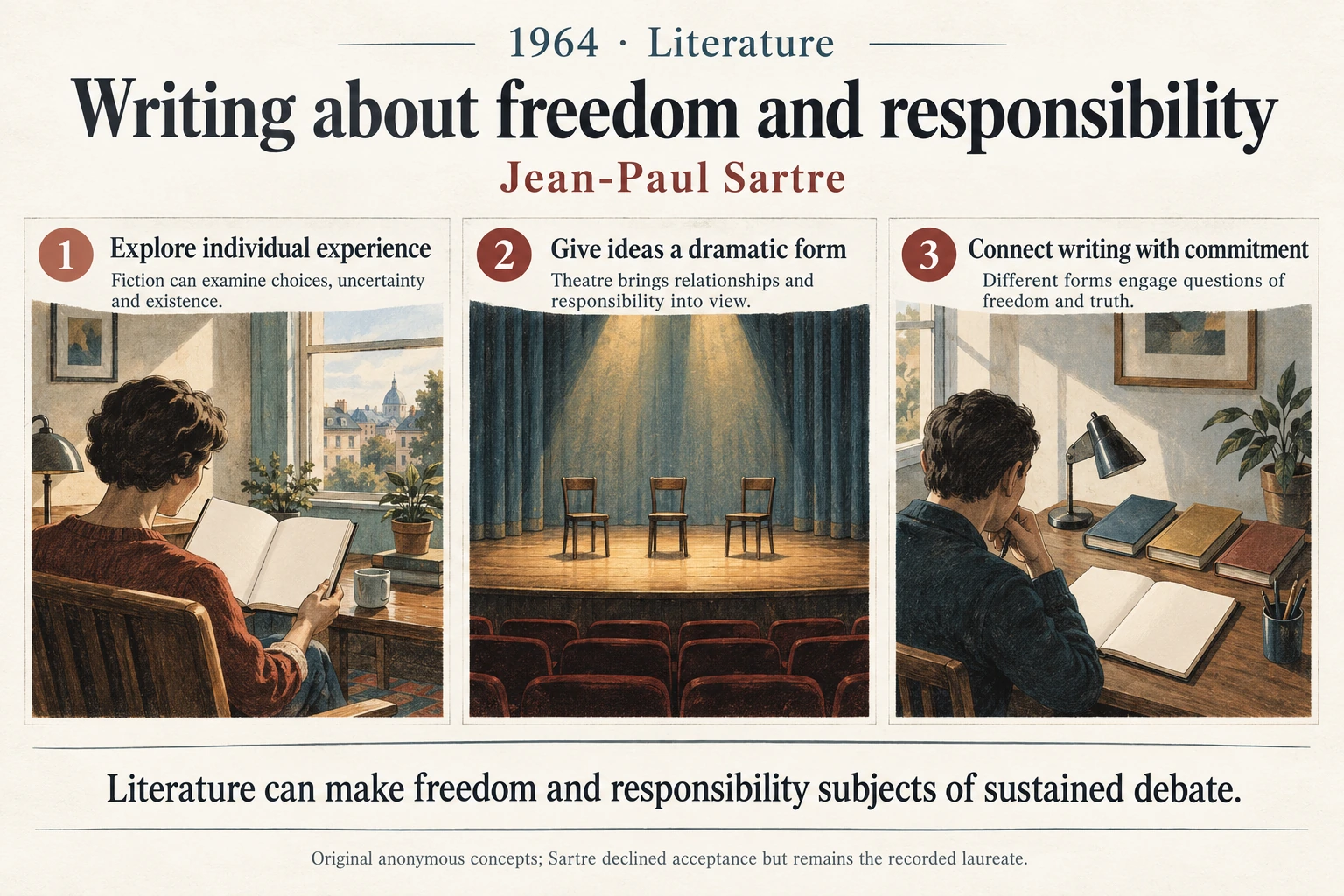
Infographic explaining Writing about freedom and responsibility
Original AI-generated infographic. A conceptual overview; the explanations and sources below provide context.
Read the poster text

Literature can make freedom and responsibility subjects of sustained debate.

  1. Explore individual experience

    Fiction can examine choices, uncertainty and existence.

  2. Give ideas a dramatic form

    Theatre brings relationships and responsibility into view.

  3. Connect writing with commitment

    Different forms engage questions of freedom and truth.

Original anonymous concepts; Sartre declined acceptance but remains the recorded laureate.

01 · The contribution

The idea, in everyday language

Literature can explore how people interpret their situation, choose and take responsibility. Sartre pursued these concerns across novels, stories, plays, criticism and philosophy, rather than separating artistic work from intellectual commitment.

Nausea, The Wall, Being and Nothingness and No Exit offered different forms for examining existence, relationships and freedom. The Words revisited childhood and the making of a writer. The Academy recognised his influence and the intellectual character of his work. Sartre declined the prize, citing objections to official honours and institutional association.

Why it matters

The award acknowledged a writer central to postwar literary and philosophical discussion. His works stimulated admiration, criticism and debate. Refusal did not annul the Academy’s decision: Sartre remains the recorded full-share 1964 laureate, although presentation could not take place.
02 · The people

Who brought the idea to life?

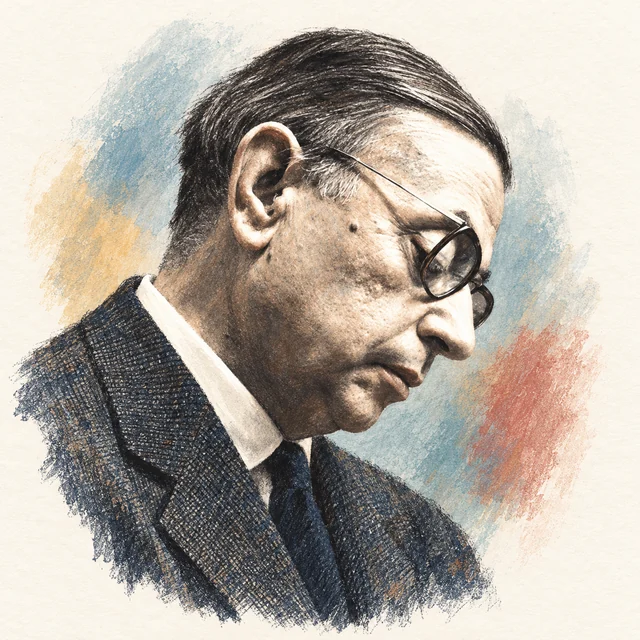
Illustrated portrait of Jean-Paul Sartre

Jean-Paul Sartre

Prize share · 1

Sartre was recognised for influential writing rich in ideas and concerned with freedom and truth. He declined acceptance but remains the recorded full-share Literature laureate.

Read the biography ↗

03 · Years in the making

The path here

  1. 1929

    Sartre passes the philosophy teaching examination and meets Beauvoir.

  2. 1933

    He studies phenomenology in Berlin.

  3. 1938

    Nausea appears.

  4. 1939

    The Wall story collection appears.

  5. 1943

    Being and Nothingness appears.

  6. 1944

    No Exit premieres.

  7. 1964

    The Words appears; Sartre is awarded the prize and declines it.

04 · Read further

From the original sources

Original explanations by Curionode, based on the official records below. Biographical details and affiliations refer to the award year.

  1. Official announcement nobelprize.org
  2. Official award summary nobelprize.org
  3. BnF Sartre chronology multimedia-ext.bnf.fr
  4. BnF The Wall publication history expositions.bnf.fr
  5. Official biography: Jean-Paul Sartre nobelprize.org

More in Literature

Browse this subject ↗