c.curionodeThe Nobel Archive

2022 · Peace

Keeping a record when power wants silence

An advocate and two organisations show how testimony, public memory and legal accountability sustain civil society.

Civil societyTestimonyHuman rights
2022Peace

Visual guide

The prize, pictured

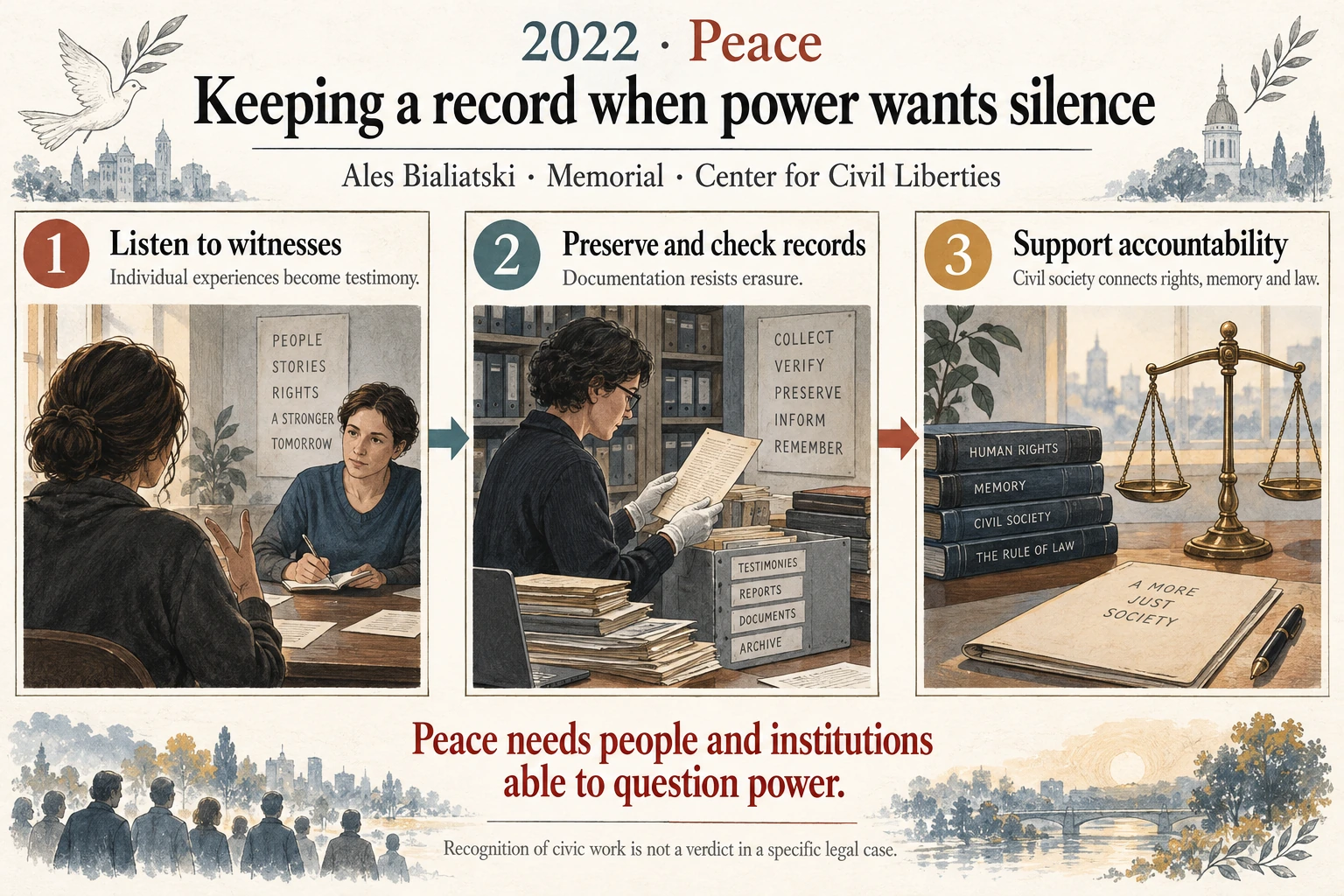
Infographic explaining Keeping a record when power wants silence
Original AI-generated infographic. A conceptual overview; the explanations and sources below provide context.
Read the poster text

Peace needs people and institutions able to question power.

  1. Listen to witnesses

    Individual experiences become testimony.

  2. Preserve and check records

    Documentation resists erasure.

  3. Support accountability

    Civil society connects rights, memory and law.

Recognition of civic work is not a verdict in a specific legal case.

01 · The contribution

The idea, in everyday language

People need ways to question power, preserve evidence and defend one another’s rights. Bialiatski’s work in Belarus, Memorial’s historical and human-rights work in Russia, and the Center for Civil Liberties in Ukraine approach that task through different histories and institutions.

Their work connects individual testimony with records that can be checked, shared and used in public debate or legal processes. The committee recognised the importance of independent civil society for peace and democracy, including under severe pressure.

Why it matters

Documentation can resist erasure, support victims and create foundations for accountability. The award drew attention to sustained civic institutions as part of peace, beyond agreements between governments.
02 · The recipients

Who brought the idea to life?

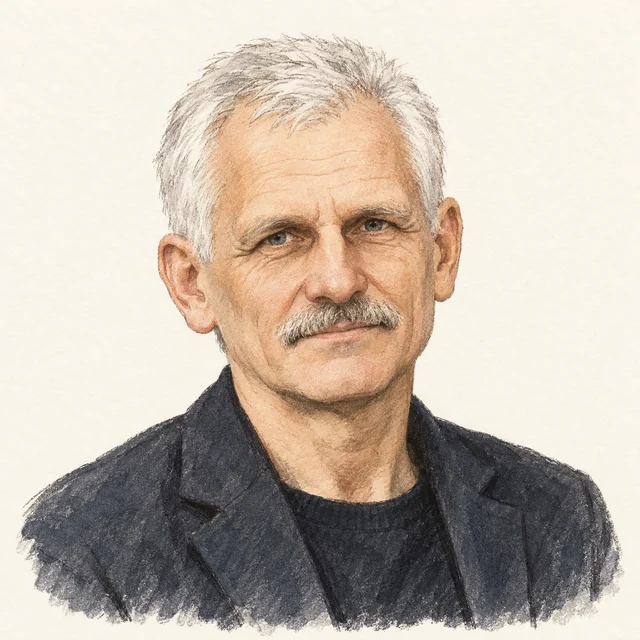
Illustrated portrait of Ales Bialiatski

Ales Bialiatski

Prize share · 1/3

His work built lasting support for political prisoners and documented abuses despite repeated imprisonment. The committee recognised this defence of civil society and the right to challenge the exercise of power.

Read the biography ↗
Symbolic illustration representing Memorial

Memorial

Prize share · 1/3

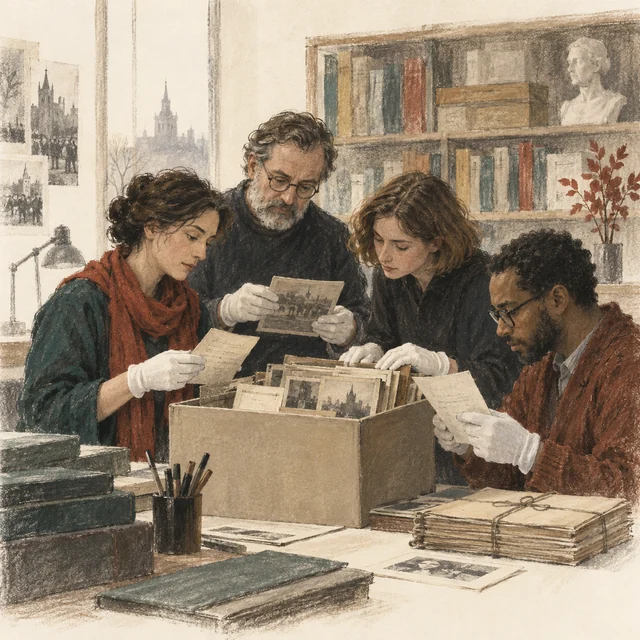
The organisation connected evidence about past repression with documentation of current violations. Its records of political prisoners, testimony and war crimes made experiences that authorities sought to erase available for scrutiny.

Read the biography ↗
Symbolic illustration representing Center for Civil Liberties

Center for Civil Liberties

Prize share · 1/3

The centre gathers and preserves evidence of abuses, works with international partners and argues for accountability through legal institutions. The committee recognised how this sustained civic work supports human rights and peaceful coexistence.

Read the biography ↗

03 · Years in the making

The path here

  1. 1987

    Memorial begins preserving the memory of victims of Soviet repression.

  2. 1996

    Bialiatski founds Viasna to support detained demonstrators and their families.

  3. 2007

    The Center for Civil Liberties is founded in Kyiv.

04 · Read further

From the original sources

Original explanations by Curionode, based on the official records below. Biographical details and affiliations refer to the award year.

  1. Official award announcement nobelprize.org
  2. Ales Bialiatski — official record nobelprize.org
  3. Memorial — official record nobelprize.org
  4. Center for Civil Liberties — official record nobelprize.org