A life in context
The person behind the prize
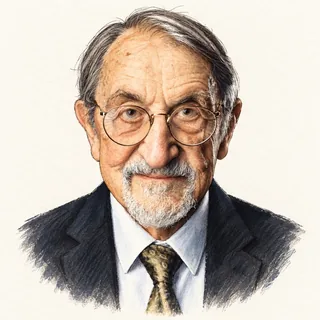
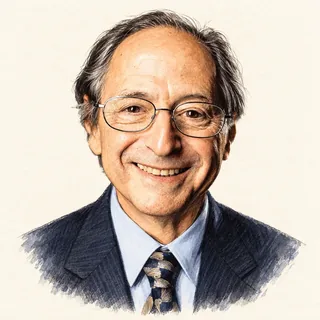
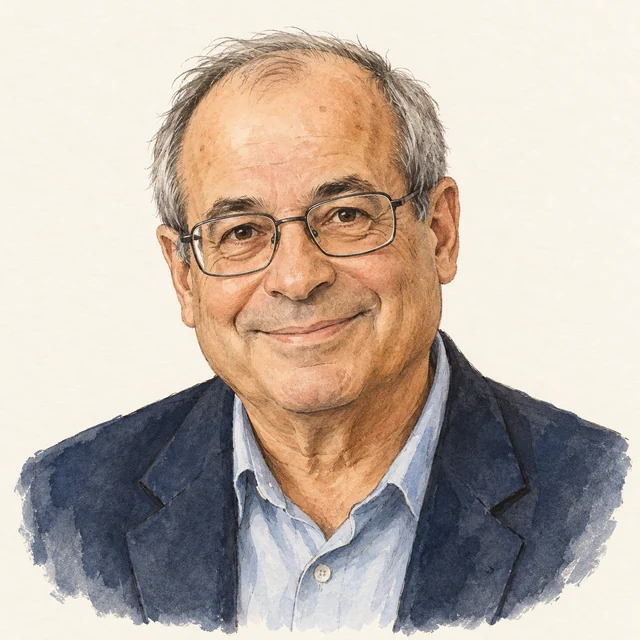
Warshel was born in the Sde Nahum kibbutz and studied at the Technion before completing his doctorate at the Weizmann Institute in 1969. He worked with Michael Levitt on computational models and with Martin Karplus at Harvard. After further research in Israel and Cambridge, he joined the University of Southern California in 1976. A recurring question in his work was how enzymes make particular chemical reactions easier to carry out.
The contribution
Warshel was a connecting figure in the development of hybrid methods: he collaborated with Karplus on a 1972 quantum–classical model and with Levitt on an enzyme-reaction model published in 1976. The work made it possible to investigate a chemically changing region while including the influence of the surrounding protein, rather than treating the reaction as isolated from its environment.
The idea in plain language
A picture of a protein shows where its atoms are, but not necessarily how a reaction happens inside it. Bonds can break and form as electrons rearrange. Quantum calculations can describe that changing electronic structure, but treating an entire large protein and its environment at the same detailed level is expensive. A simpler classical model handles many atoms efficiently, but an ordinary fixed-bond model cannot adequately describe a changing chemical bond.
Read the full award story ↗