A life in context
The person behind the prize
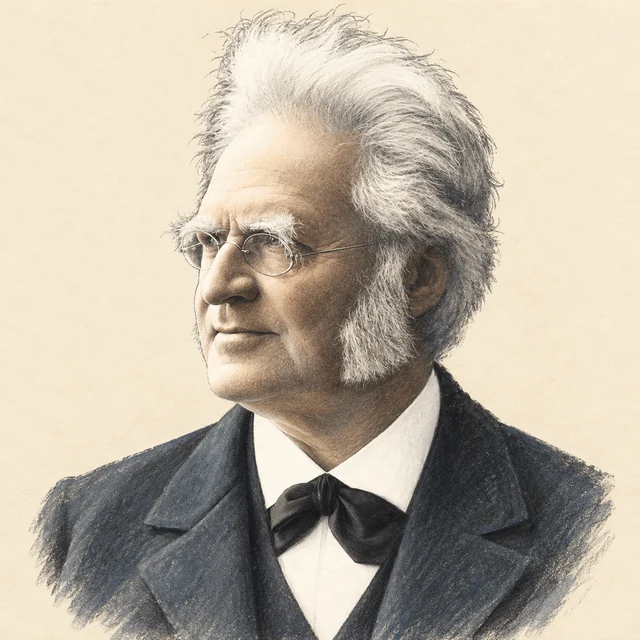
Bjørnstjerne Bjørnson was born at Kvikne in 1832 and spent much of his childhood at Nesset, where his father was a pastor. Schooling in Molde was followed by studies in Christiania, now Oslo; he passed his university entrance examination in 1852. Journalism and theatre criticism became routes into literature. The 1857 peasant tale Synnøve Solbakken brought broad recognition, and Arne and A Happy Boy extended his portrayal of rural life. His early work drew on Norwegian history, oral culture and national romanticism, while later writing turned increasingly toward contemporary institutions, moral conflict and the demands of social change. Theatre management in Bergen and Christiania connected his literary practice with performance. Plays such as The Editor and The Bankrupt addressed public speech and business conduct; A Gauntlet, Beyond Human Power and later works questioned conventions of gender, belief and responsibility. Novels including The Heritage of the Kurts and In God’s Way explored education and tolerance through extended social narratives. Bjørnson also wrote the words of Ja, vi elsker dette landet; Rikard Nordraak composed its music. The association with Norway’s national anthem is important, but the 1903 Literature Prize honoured an entire authorship across poetry, prose and drama rather than one song. His family settled at Aulestad in 1875, and travel and periods abroad sustained his international contacts. As a public speaker and polemicist he advocated causes including national independence, minority rights and women’s public participation. He also served on the Norwegian Nobel Committee, a separate institution from the Swedish Academy that awarded his Literature Prize. He was present in Stockholm for the 1903 ceremony. The Academy’s praise reflected its literary and moral judgments at that time; a critical reading can recognise those judgments without making them universal measures of literary worth. Bjørnson died in Paris in 1910. His career demonstrates how fiction, theatre, poetry and public debate could form a connected literary life while remaining distinct kinds of work.
The contribution
Bjørnson received the full Literature Prize for a wide-ranging authorship. Rural tales, historical and contemporary drama, poetry and public engagement should be considered together; he wrote anthem lyrics, not Nordraak’s music.
The idea in plain language
Early stories including Synnøve Solbakken and Arne made rural Norwegian lives central to literature. They drew on national romanticism and oral culture while giving relationships, moral choices and personal development narrative force.
Read the full award story ↗

