A life in context
The person behind the prize
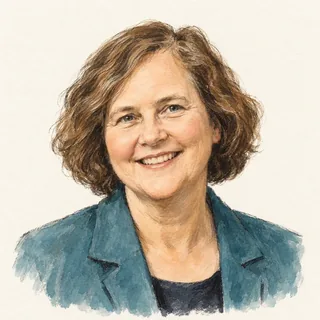
Greider studied biology at the University of California, Santa Barbara and joined Elizabeth Blackburn’s laboratory at Berkeley for graduate research. In 1984, while still a student, she detected the enzyme activity that became known as telomerase. She completed her doctorate in 1987, continued research at Cold Spring Harbor Laboratory and joined Johns Hopkins in 1997. Her work followed an unexpected biochemical signal toward a fundamental cellular mechanism.
The contribution
Greider and Blackburn identified an activity that could extend telomeric DNA, then investigated the enzyme responsible. Telomerase contains an RNA component that supplies a template as new DNA repeats are added. Greider’s subsequent work explored how telomere maintenance affects chromosome stability, cell division and disease. Telomerase supports some healthy proliferating cells but can also help cancer cells keep dividing.
The idea in plain language
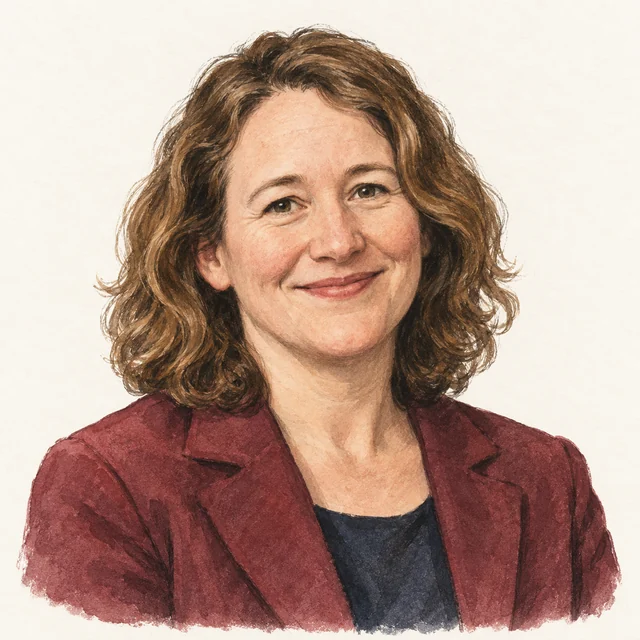
The end of a chromosome presents two problems. It must be protected from degradation or mistaken repair, and ordinary DNA copying has difficulty reproducing the very end of a linear molecule. Blackburn studied repeated DNA at the ends of Tetrahymena chromosomes. With Szostak, she showed that these sequences could protect linear DNA introduced into yeast, revealing a function that crossed distant species.
Read the full award story ↗