A life in context
The person behind the prize
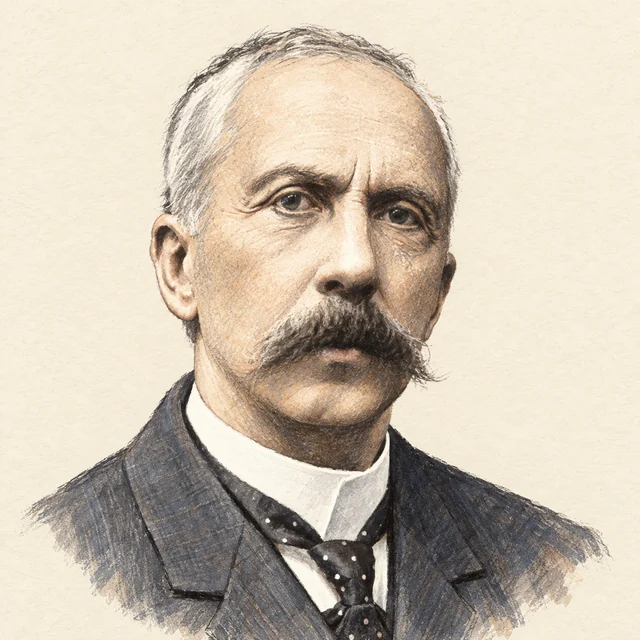
Charles Robert Richet was born in Paris, where his father taught clinical surgery. He trained in medicine and science and became a professor of physiology in the Paris medical faculty in 1887. His wide research interests included body-temperature regulation, digestion and experimental pathology. He also edited scientific journals and wrote on subjects beyond medicine. In 1902, working with Paul Portier, he published research on anaphylaxis: under certain experimental conditions, an initial exposure could lead to an unusually severe response on later exposure. The result challenged the expectation that prior exposure would always bring protection. Richet developed the subject in further work, including studies of transferring hypersensitivity through serum. The 1913 Nobel Prize recognised anaphylaxis research, not a complete modern account of allergy. His work belongs to a history that also includes his collaborators and predecessors. Outside this research, Richet promoted racist and eugenic ideas. In 2015, the Paris public-hospital authority AP-HP cited those writings when announcing removal of his name from a hospital in Villiers-le-Bel. Its decision is linked here so that the wider biography is visible alongside the scientific contribution. His other interests included dramatic writing and spiritualism. He died in Paris in 1935.
The contribution
Richet received the full Physiology or Medicine Prize for research on anaphylaxis. His work with Portier and subsequent investigations established acquired hypersensitivity as a systematic physiological problem, rather than an unexplained exception to protection after exposure.
The idea in plain language
Researchers already knew examples in which prior exposure produced protection. Richet and Paul Portier’s work, published in 1902, demonstrated a different possibility in experiments with dogs: after an initial exposure, a later encounter with the substance could produce a sudden, severe reaction. The effect could not be explained simply by adding together the amounts given.
Read the full award story ↗