A life in context
The person behind the prize
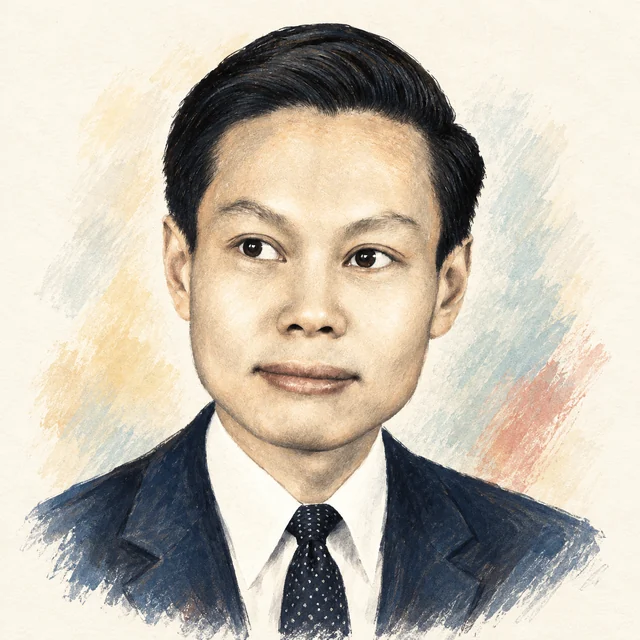
Yang studied physics in wartime China, earning his bachelor’s degree at National Southwest Associated University in Kunming in 1942 and his master’s degree at Tsinghua, then evacuated to Kunming, in 1944. He went to Chicago in 1946 and completed his doctorate in 1948 under Edward Teller; Enrico Fermi was another important influence, rather than his doctoral adviser. He joined the Institute for Advanced Study in 1949 and became professor in 1955. Research in statistical mechanics and elementary-particle physics led to his collaboration with Lee on an assumption about spatial symmetry. Their 1956 review found no decisive experimental test establishing parity conservation in weak interactions and proposed ways to investigate it. Experiments by Wu and the National Bureau of Standards team, followed by other researchers, showed that the assumption failed. Yang received half of the 1957 prize at Princeton. The theoretical proposal and the experimental work were complementary contributions by different people.
The contribution
Yang and Lee critically examined parity conservation in weak interactions and proposed decisive tests. Yang received one half of the Physics Prize.
The idea in plain language
Physicists widely assumed that reflecting the spatial arrangement of a process would leave the underlying laws unchanged. This parity symmetry was well supported in other domains, but Lee and Yang’s 1956 review found no decisive evidence establishing it for weak interactions, such as beta decay. An accepted assumption needed a specific experimental test.
Read the full award story ↗