A life in context
The person behind the prize
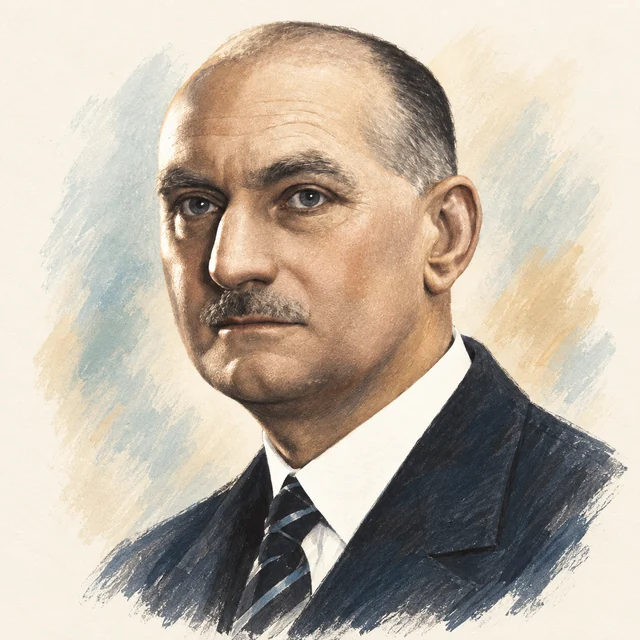
Heymans qualified in medicine at Ghent in 1920 after military service during the First World War. Further study took him to laboratories in Paris, Lausanne, Vienna, London and Cleveland. He became a lecturer at Ghent in 1922 and succeeded his father Jean François as professor and institute director in 1930. Working with his father and colleagues, he investigated how blood circulation and breathing influence one another through nervous reflexes. Work with Bouckaert and Dautrebande in 1930–1931 helped establish chemical sensing around the carotid region; de Castro’s anatomical work had earlier suggested a sensory function for the carotid body. Heymans’s group distinguished chemical responses from pressure responses, and work with Rijlant investigated the associated nerve signals. His whole 1938 Medicine Prize recognised the sinus and aortic mechanisms in respiratory regulation. The prize was reserved in 1938 and awarded in 1939; its medal was presented in Ghent on 16 January 1940. His later international teaching and research extended beyond the work recognised by this award.
The contribution
Heymans received the whole Medicine Prize for the role of sinus and aortic mechanisms in regulating respiration. Research with his father and other collaborators established important peripheral sensory reflexes.
The idea in plain language
Breathing usually adjusts without a conscious decision. How does the nervous system receive information about what the body needs? Heymans’s research showed that blood chemistry can influence respiration through sensory structures outside the brain, as well as through central mechanisms. Important signals arise around the carotid arteries and the aortic region and reach the brain through nerves.
Read the full award story ↗

