A life in context
The person behind the prize
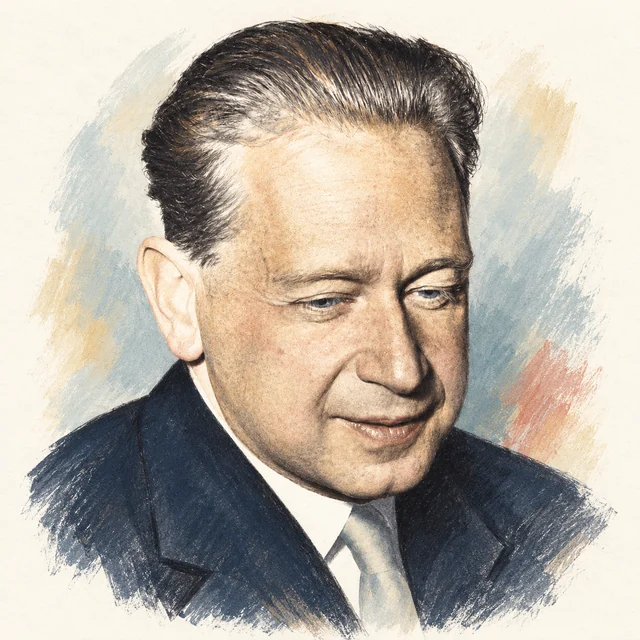
Hammarskjöld studied humanities, economics and law before a Swedish public-service career. The official UN biography records his Stockholm economics doctorate in 1933, whereas the Nobel biography gives 1934. He served in financial administration, chaired the Riksbank board during 1941–1948 and moved into foreign affairs. Becoming the UN’s second Secretary-General in 1953 and being re-elected in 1957, he worked to strengthen an independent international Secretariat and used quiet diplomacy in crises. Suez-related work included the United Nations Emergency Force in 1956; the Congo operation began in 1960. He died in an aircraft crash near Ndola in September 1961 while seeking a cease-fire. The full Peace Prize was awarded posthumously to him as an individual. Markings was published in 1963, after his death and award.
The contribution
Hammarskjöld strengthened the UN’s independent international service and peace diplomacy. He received the full 1961 Peace Prize posthumously.
The idea in plain language
International cooperation depends on institutions able to work across national interests. During Cold War crises and decolonisation, the UN Secretariat faced pressures from powerful states and disagreement about its role.
Read the full award story ↗

