A life in context
The person behind the prize
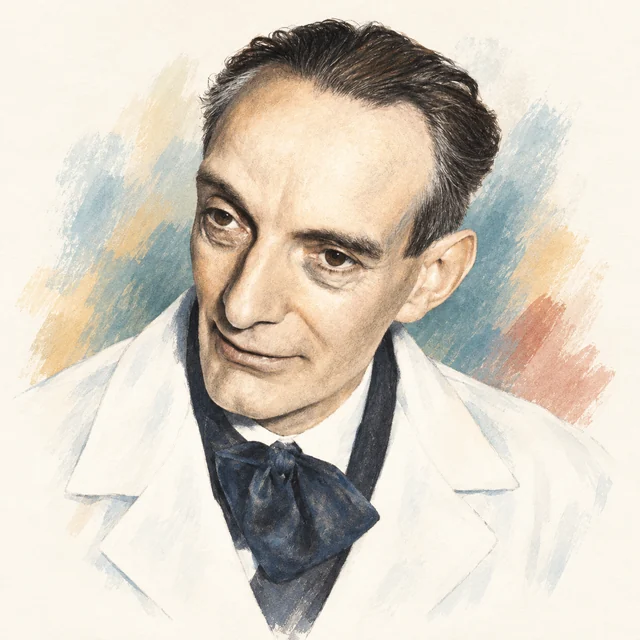
Bovet graduated at Geneva in 1927 and completed a science doctorate in 1929 after work in zoology and comparative anatomy with Émile Guyénot. From 1929 to 1947 he worked in the Institut Pasteur’s therapeutic-chemistry laboratory in Paris, associated with Ernest Fourneau. Research compared the structures of synthetic substances with their biological effects. In 1937, Bovet and Anne-Marie Staub found a synthetic antihistamine, although the early substance was too toxic for clinical use. Work on synthetic curare-like substances in the 1940s pursued control of nerve-to-muscle responses. Filomena Bovet-Nitti was a sustained research collaborator and coauthor of their 1948 book on chemical structure and pharmacodynamic action. In 1947 he joined the Istituto Superiore di Sanità in Rome to lead therapeutic chemistry. The full 1957 prize concerned synthetic substances inhibiting selected actions of substances in the body, particularly vascular and skeletal-muscle effects. Their subsequent 1959 curare book belongs to later history.
The contribution
Bovet connected synthetic chemical structures with inhibition of selected physiological actions, particularly in blood vessels and skeletal muscles. He received the full Medicine Prize.
The idea in plain language
Signals such as histamine and acetylcholine can produce biological responses, but a chemical substance’s composition alone does not predict how it will affect those responses. Researchers needed to relate chemical structure to action, including effects on blood vessels and skeletal muscles.
Read the full award story ↗