A life in context
The person behind the prize
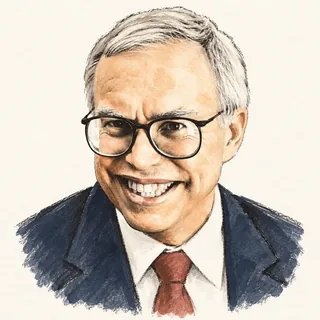
McFadden grew up in a rural setting in the United States and studied physics before economics at the University of Minnesota, receiving his doctorate in 1962. His career included Berkeley, Yale and MIT; he returned to Berkeley in 1990. He brought economic theory and statistics together to study everyday decisions such as how people travel, where they live and which services they use.
The contribution
McFadden developed theory and methods for discrete choice: decisions among a finite set of alternatives. Conditional logit connected a model of individual utility with probabilities that researchers could estimate from observed choices. Applications included predicting travel-mode shares and studying demand around the San Francisco BART system. His later methods addressed restrictions in simpler models. Such models estimate patterns under assumptions, rather than perfectly predicting every person’s next decision.
The idea in plain language
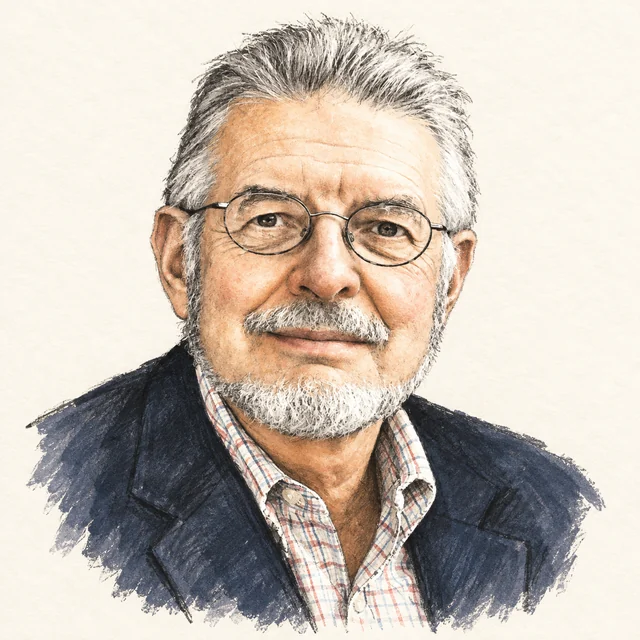
Data do not always show a representative slice of the world. Wages are usually observed for people who work, while the potential wages of non-workers are missing. Heckman developed methods that model selection and, under suitable assumptions, correct estimates of relationships in the observed sample. The question is not only what the data say, but how people came to appear in them.
Read the full award story ↗