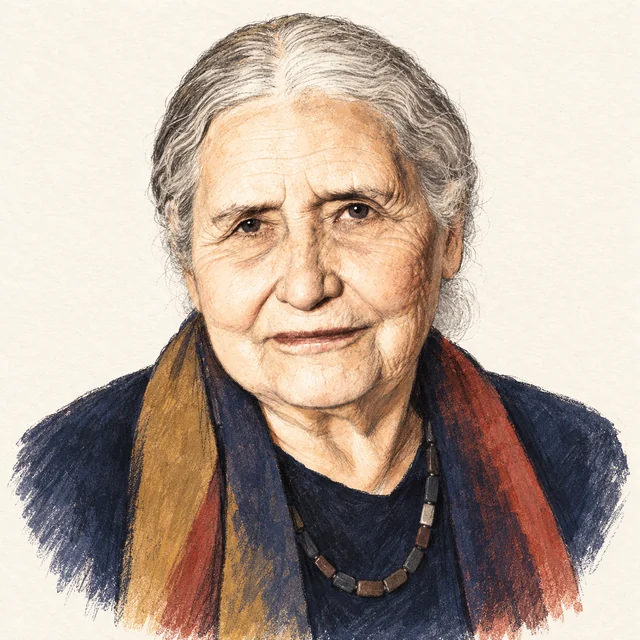
A life in context
The person behind the prize
Lessing was born to British parents in Persia and moved with her family to Southern Rhodesia, now Zimbabwe, in 1925. She left formal schooling at fourteen, worked in several occupations and began publishing stories. She moved to London in 1949; The Grass is Singing appeared in 1950. Her later work ranged across realistic novels, speculative fiction, stories and autobiography, repeatedly examining power, belonging and the limits of received ideas.
The contribution
The 2007 prize recognised the scope and critical force of her writing, especially its exploration of women’s experience within a divided civilisation. The Golden Notebook (1962) uses fragmented records and overlapping forms to connect personal life, political belief and a writer’s struggle to make sense of experience. Her work is broader than a single label: later speculative fiction also examines collective failure, survival and the way societies tell stories about themselves.
The idea in plain language
A person may tell one story about work, another about love, and another about political belief. Those stories do not always fit together. Lessing’s writing explores the gaps between a person’s self-understanding and the social world around them. Her characters encounter divisions of gender, race, class and conviction, often discovering that a reassuring explanation cannot contain their experience.
Read the full award story ↗

