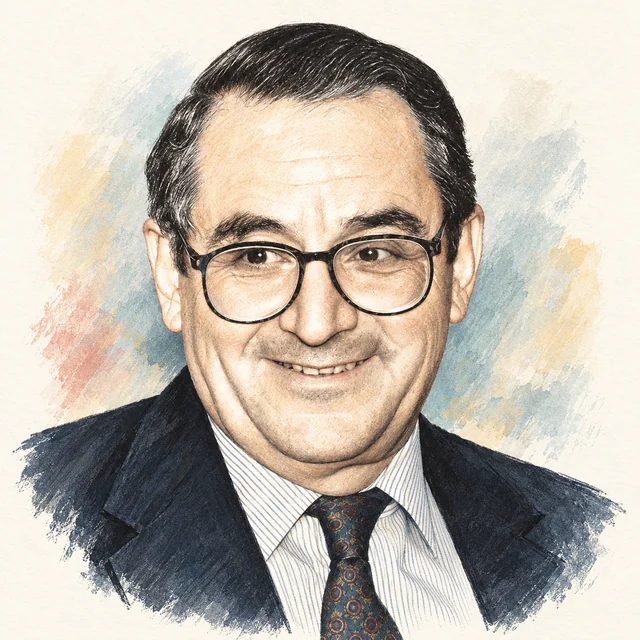
A life in context
The person behind the prize
Corey grew up in Methuen and entered MIT at sixteen, initially attracted to engineering before turning to chemistry. After doctoral research he joined the University of Illinois, where teaching and research developed together. During a 1957 sabbatical he began thinking explicitly about planning syntheses backwards from a target. He moved to Harvard in 1959. His research combined strategic planning with new reactions and the synthesis of complex natural products, including prostaglandins.
The contribution
Corey developed retrosynthetic analysis: start with a desired molecular structure, identify strategic conceptual disconnections and trace a route to more accessible precursors. These are planning operations; actual synthesis runs forwards through chemical reactions. He and colleagues also developed reagents, reactions and stereoselective methods needed to make plans work. The whole Chemistry Prize recognised contributions to both the theory and methodology of organic synthesis.
The idea in plain language
A complex molecule can contain many linked atoms and specific three-dimensional arrangements. Guessing a sequence of reactions from available chemicals may lead into a dead end. Retrosynthetic analysis starts from the desired structure and asks which simpler precursors could produce it. Strategic conceptual disconnections create a tree of possibilities, which can be followed back toward accessible starting materials.
Read the full award story ↗

