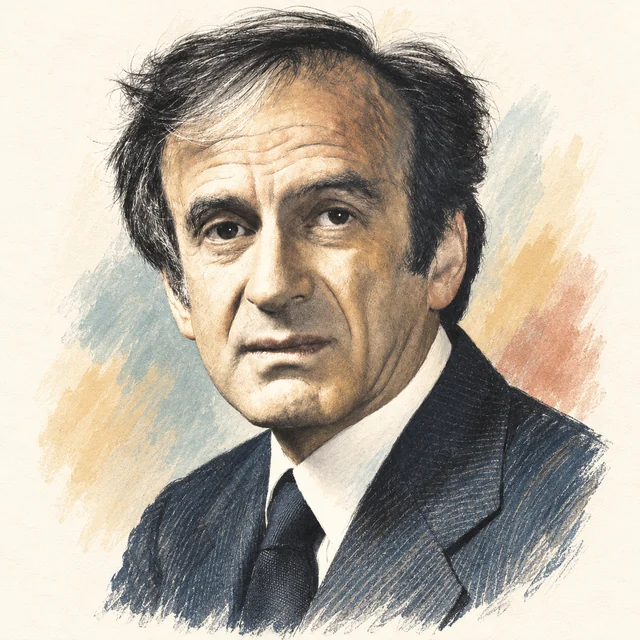
A life in context
The person behind the prize
Wiesel grew up in Sighet and was deported to Auschwitz-Birkenau in 1944 at fifteen. His mother and younger sister were murdered. He and his father endured forced labour; his father died at Buchenwald before liberation. Wiesel was sixteen when the camp was liberated in April 1945. He later lived in France, studied and worked as a journalist, then settled in the United States. His French memoir Night appeared in 1958. He taught at Boston University from 1976 and helped establish the U.S. Holocaust Memorial Museum, which opened in 1993.
The contribution
Through testimony, writing and public advocacy, Wiesel challenged indifference to persecution and connected Holocaust remembrance with human dignity. He chaired the U.S. Holocaust Memorial Council from 1980 to 1986, following an earlier presidential commission. The Peace Prize recognised his role as a messenger to humanity and advocate for the oppressed. He received the full prize; the museum opened after the award.
The idea in plain language
A survivor of the Holocaust, Wiesel wrote about persecution, loss and survival. His memoir Night, first published in French in 1958, made personal testimony part of wider public remembrance. Writing and teaching invited readers to confront what happened and consider their responsibilities toward others.
Read the full award story ↗

