A life in context
The person behind the prize
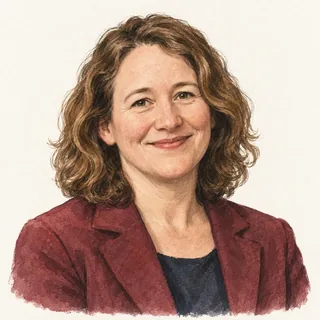
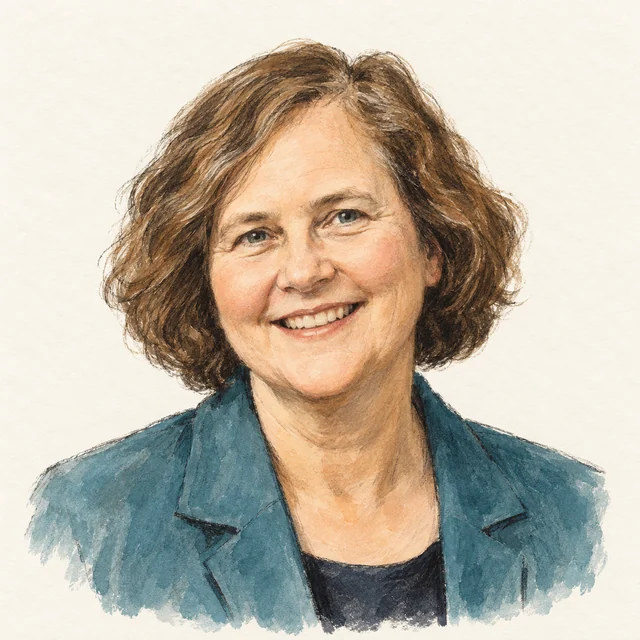
Blackburn grew up in Tasmania with an early interest in animals and nature. She studied biochemistry at Melbourne and completed her doctorate at Cambridge in 1975. At Yale, working with Joseph Gall, she investigated DNA in the single-celled organism Tetrahymena. She later worked at Berkeley and moved to the University of California, San Francisco in 1990. Her research connected molecular sequences with the problem of maintaining chromosomes.
The contribution
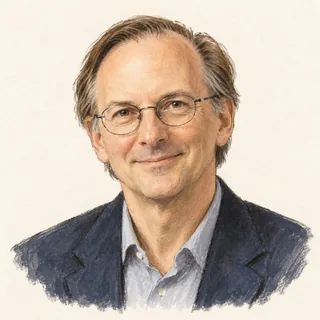
Blackburn identified repeated DNA at chromosome ends and, with Jack Szostak, showed that such end sequences could protect linear DNA in yeast. With her graduate student Carol Greider, she then discovered telomerase, the enzyme that adds telomeric DNA. The work explained how specialised DNA and an RNA-containing enzyme help maintain chromosome ends; it did not establish a simple switch for reversing human ageing.
The idea in plain language
The end of a chromosome presents two problems. It must be protected from degradation or mistaken repair, and ordinary DNA copying has difficulty reproducing the very end of a linear molecule. Blackburn studied repeated DNA at the ends of Tetrahymena chromosomes. With Szostak, she showed that these sequences could protect linear DNA introduced into yeast, revealing a function that crossed distant species.
Read the full award story ↗