A life in context
The person behind the prize
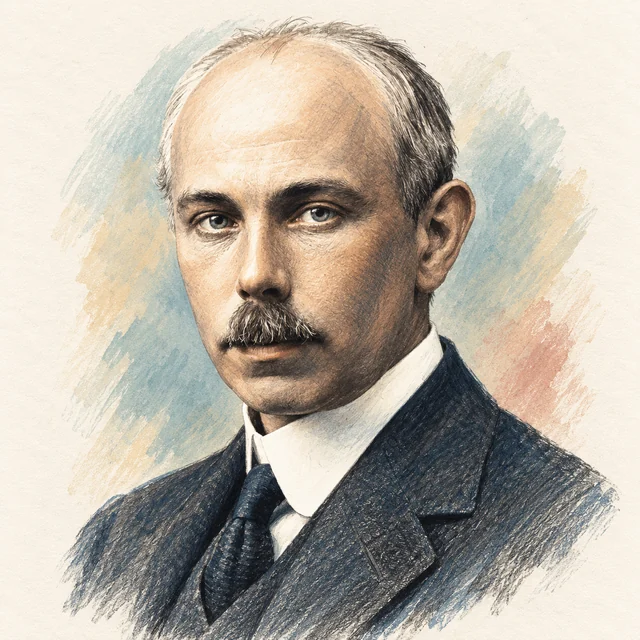
Aston studied chemistry and physics at Mason College in Birmingham, which later became part of the University of Birmingham. A period as a brewery chemist was followed by research on electrical discharges in gases. His skill in building pumps and apparatus became important to his experimental work. In 1909 he accepted J. J. Thomson’s invitation to work at Cambridge on positive rays, obtaining evidence that neon contained atoms of different masses. War interrupted the research. Returning to the Cavendish Laboratory in 1919, he developed a mass spectrograph that focused charged particles and recorded their mass-to-charge differences more sharply. It revealed isotopes in many non-radioactive elements and supported an approximate whole-number pattern in isotope masses. His book Isotopes appeared in 1922, the year of his full Chemistry Prize. He continued improving the instrument and studying the small departures from whole numbers, rather than treating the pattern as exact. He remained associated with Cambridge and died there in 1945.
The contribution
Aston received the full Chemistry Prize for discovering isotopes in many non-radioactive elements with his mass spectrograph and for formulating the whole-number rule. Better focusing made closely related atomic masses distinguishable.
The idea in plain language
Chemical behaviour alone could hide a difference between atoms of the same element. Earlier work had revealed isotopy, but identifying it widely among non-radioactive elements required a sensitive physical comparison of atomic masses. Aston improved the use of electric and magnetic fields to focus charged particles with the same mass-to-charge ratio into sharp recorded lines.
Read the full award story ↗

