A life in context
The person behind the prize
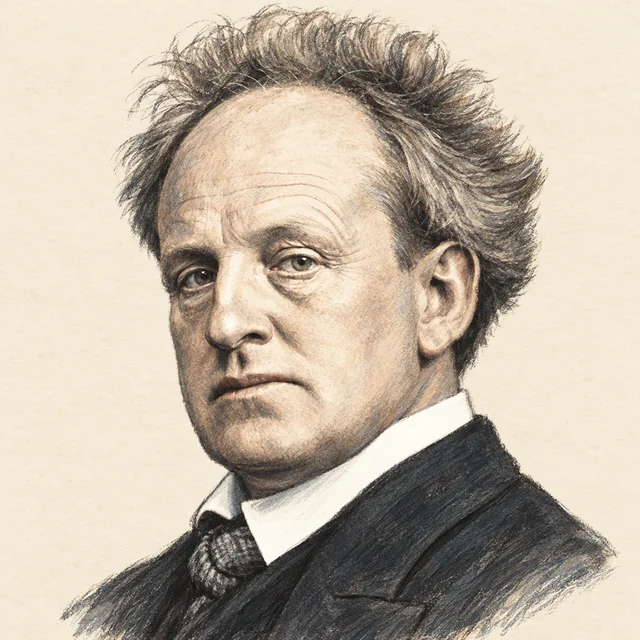
Gerhart Hauptmann grew up in Silesia and explored agriculture, sculpture and university lectures before committing himself to writing. He did not follow a completed professional degree into literature. Marriage to Marie Thienemann gave him financial security; the couple moved to Erkner in 1885, where everyday working lives helped shape his attention to character and social conditions. Before Dawn made him widely known after its controversial Berlin premiere in 1889. The Weavers, published in 1892, brought a community of impoverished weavers into drama; its private premiere in 1893 preceded public performance in 1894. His work also included comedy, historical drama and symbolic or fairy-tale plays, such as Hannele’s Ascension and The Sunken Bell. The 1912 Nobel citation recognised his varied dramatic achievement rather than one play or one school of naturalism alone. His later political position was accommodating and contradictory: celebrated under successive regimes, he continued to receive honours under National Socialism, while also attending the funerals of Jewish friends. These later choices belong to his biography without becoming the reason for the 1912 award. He died in Agnetendorf in 1946.
The contribution
Hauptmann received the full Literature Prize chiefly for his extensive and varied dramatic work. He brought individual lives and social pressures to the stage while also exploring symbolic, historical and comic forms.
The idea in plain language
Before Dawn drew attention and controversy in 1889. The Weavers brought impoverished Silesian workers and a community’s pressures into dramatic focus. Rather than treating characters only as examples of an opinion, Hauptmann gave their circumstances and relationships a visible role in what happened. Speech, setting and the concentration of a performance could make social conditions felt through particular people.
Read the full award story ↗

