A life in context
The person behind the prize
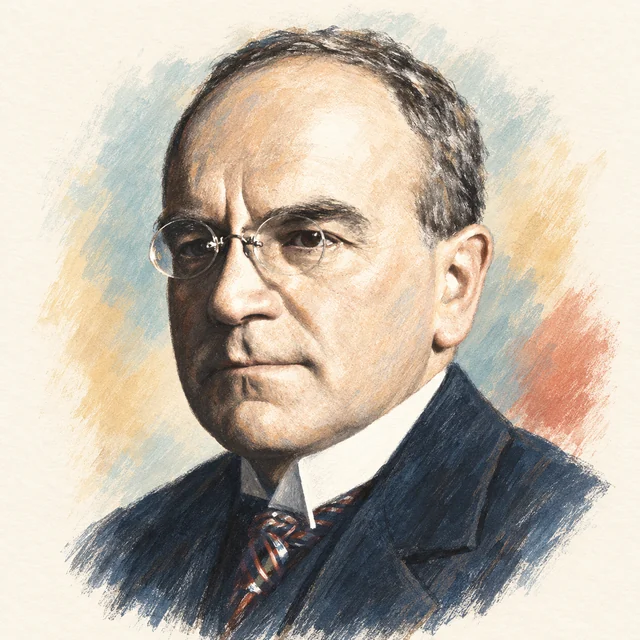
Wieland was the son of a pharmaceutical chemist and studied in Munich, Berlin and Stuttgart. He completed his doctorate in Munich under Johannes Thiele in 1901. His research ranged across organic nitrogen compounds, radicals and the chemistry of natural substances, rather than following a single narrow line. Publications on bile acids began in 1912. He investigated relationships among these difficult compounds through chemical transformations and connected them with other families of natural substances. After a professorship in Freiburg, he returned to Munich in 1925 to succeed Richard Willstätter. His full Chemistry Prize belonged to 1927 but was announced and presented in 1928, alongside the separate 1928 award to Adolf Windaus. Their complementary work linked bile acids and sterols; it did not mean that every detail of the modern steroid framework was already settled at the award. Wieland continued work on natural products and biological oxidation, trained a large research school and died in 1957.
The contribution
Wieland received the full 1927 Chemistry Prize, awarded in 1928, for investigations of bile-acid constitution and related substances. His chemical comparisons helped reveal relationships among complex natural compounds.
The idea in plain language
Bile acids participate in digestion, but knowing a substance’s biological setting does not reveal its molecular constitution. When Wieland began his investigations, researchers had accumulated observations about several bile acids without a clear account of all their relationships. He compared products obtained through chemical transformations to identify common features.
Read the full award story ↗

