A life in context
The person behind the prize
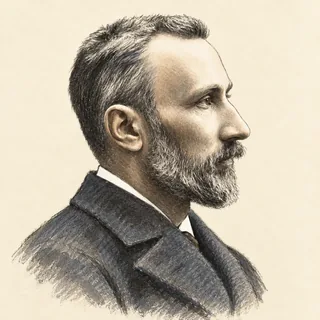
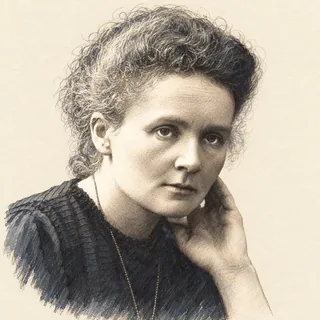
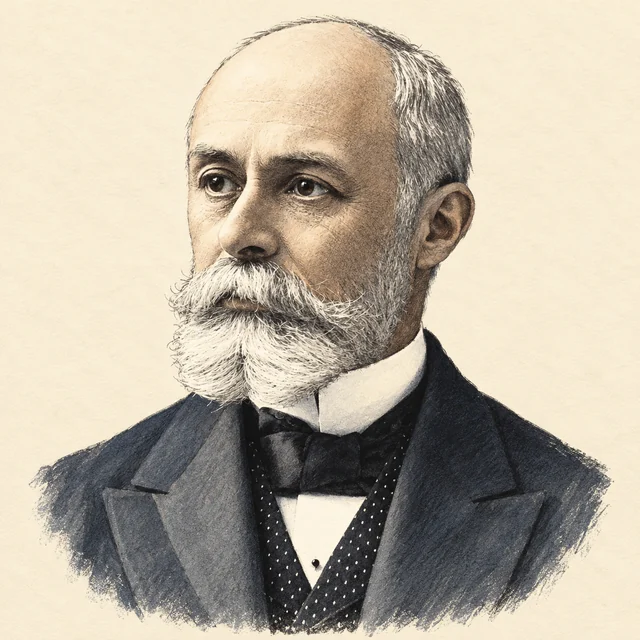
Henri Becquerel was born in Paris into a family of scientists whose work included light and phosphorescence. He entered the École Polytechnique in 1872, continued at the École des Ponts et Chaussées in 1874 and qualified as an engineer in 1877. Alongside engineering he investigated optical phenomena, earned a doctorate in 1888 and entered the Academy of Sciences in 1889. He held a physics chair at the natural-history museum from 1892 and became professor at the École Polytechnique in 1895. Röntgen’s discovery of X-rays prompted questions about other possible sources of penetrating radiation. In 1896 Becquerel investigated uranium compounds in connection with phosphorescence, the emission of light following illumination. His decisive finding was that uranium could produce a penetrating effect on photographic material without needing prior exposure to sunlight. What first appeared connected with stored light therefore required a different explanation. Further work associated the effect with uranium itself rather than with the visible glow of a particular preparation. Marie and Pierre Curie developed this line of investigation into a broader study of radioactive substances, using electrical measurements and chemical separation to find highly active constituents. The 1903 Physics Prize recognised the linked but distinct contributions: Becquerel received one half for spontaneous radioactivity, while Pierre and Marie each received one quarter for their joint research on the radiation phenomena he had discovered. Becquerel attended the Stockholm ceremony; the absent Curies were represented by the French minister. These early investigations helped open a new field of atomic physics, although today’s account in terms of unstable nuclei and radioactive decay developed through further research. Spontaneous radiation does not imply an unlimited source of energy, and radioactive rays should not be confused with ordinary visible light or every kind of X-ray. Becquerel died at Le Croisic in 1908. His discovery illustrates how a test that undermines an initial explanation can become more consequential than the hypothesis that prompted it.
The contribution
Becquerel discovered spontaneous radiation associated with uranium. He received one half of the Physics Prize; Pierre and Marie Curie each received one quarter for further research on the radiation phenomena.
The idea in plain language
The first question concerned phosphorescence: could substances that glow after illumination also emit penetrating rays? Becquerel found that uranium affected photographic material even without prior sunlight. The effect required an explanation beyond stored visible light and became evidence for spontaneous radioactivity.
Read the full award story ↗