A life in context
The person behind the prize
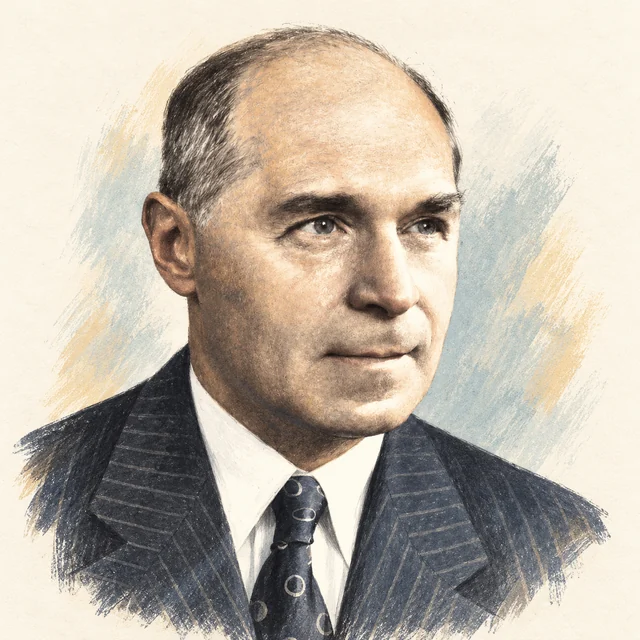
Muller trained in genetics at Columbia and participated in the research group around Thomas Hunt Morgan, Calvin Bridges and Alfred Sturtevant. After teaching at Rice and returning to Columbia, he moved to the University of Texas at Austin in 1920 and became a professor in 1925. His methods made mutation frequency a subject of quantitative study. Critical experiments in late 1926, published in 1927, showed that X-rays could greatly increase inherited changes in fruit flies. Later research took him to Berlin, the Soviet Union, Edinburgh and Amherst; in 1945 he joined Indiana University in Bloomington, his affiliation for the full 1946 Medicine Prize. His investigations concerned genes and chromosome changes, rather than direct sequencing of DNA. His later autobiographical text also advocates eugenic policies. Those social proposals must be distinguished from the experimental evidence and do not justify ranking human worth or coercive reproductive control. He is a different person from Paul Hermann Müller, the 1948 laureate.
The contribution
Muller demonstrated that X-ray irradiation could induce mutations and made them tools for investigating heredity. He received the full Medicine Prize for this discovery; induced variation does not mean precise control over a desired trait.
The idea in plain language
Inherited characteristics can change, but rare spontaneous mutations were difficult to study systematically. Muller developed ways to measure their frequency in fruit flies. Experiments in late 1926, reported in 1927, showed that X-ray irradiation could greatly increase the occurrence of inherited changes.
Read the full award story ↗

