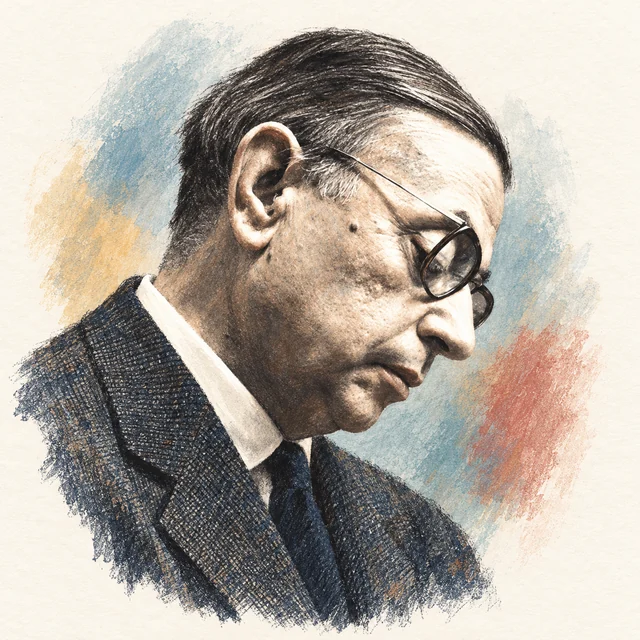
A life in context
The person behind the prize
Sartre studied at the École Normale Supérieure and passed the philosophy teaching examination in 1929, the year he met Simone de Beauvoir. He taught in Le Havre from 1931, studied phenomenology in Berlin from 1933 and later taught in Paris. After the war he worked as an independent writer. Novels, stories, drama and philosophical essays explored freedom, responsibility, relationships and commitment. Nausea appeared in 1938, The Wall collection in 1939 and Being and Nothingness in 1943; No Exit premiered in 1944. The Words, his account of childhood and writing, appeared in 1964. The Academy named him for the influence and intellectual character of his work. He declined the prize, explaining objections to official honours and institutional association. The refusal did not annul the award, and he remains its recorded full-share laureate.
The contribution
Sartre was recognised for influential writing rich in ideas and concerned with freedom and truth. He declined acceptance but remains the recorded full-share Literature laureate.
The idea in plain language
Literature can explore how people interpret their situation, choose and take responsibility. Sartre pursued these concerns across novels, stories, plays, criticism and philosophy, rather than separating artistic work from intellectual commitment.
Read the full award story ↗

