A life in context
The person behind the prize
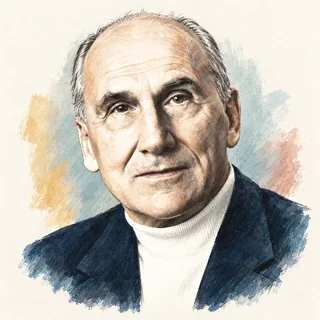
Cornforth began losing his hearing in childhood and became interested in chemistry through school teaching, home experiments and laboratory work. He graduated from Sydney in 1937 and won a scholarship to Oxford, as did the chemist Rita Harradence, whom he married in 1941. Their collaboration continued throughout his career. Work with Robert Robinson included steroid synthesis and the wartime penicillin effort. After joining the Medical Research Council in 1946, Cornforth worked with George Popjak on cholesterol biosynthesis. They co-directed Shell’s Milstead laboratory from 1962, using isotopic substitution to investigate the spatial course of enzyme reactions. Collaboration with Hermann Eggerer addressed an asymmetric methyl group. Cornforth moved to Sussex in 1975. He explicitly credited Rita’s experimental contributions and assistance with communication, alongside his wider scientific collaborators.
The contribution
Cornforth used isotope-labelled molecules to determine the stereochemical course of enzyme-catalysed reactions. He received half the Chemistry Prize, with Prelog recognised for a separate contribution to organic stereochemistry.
The idea in plain language
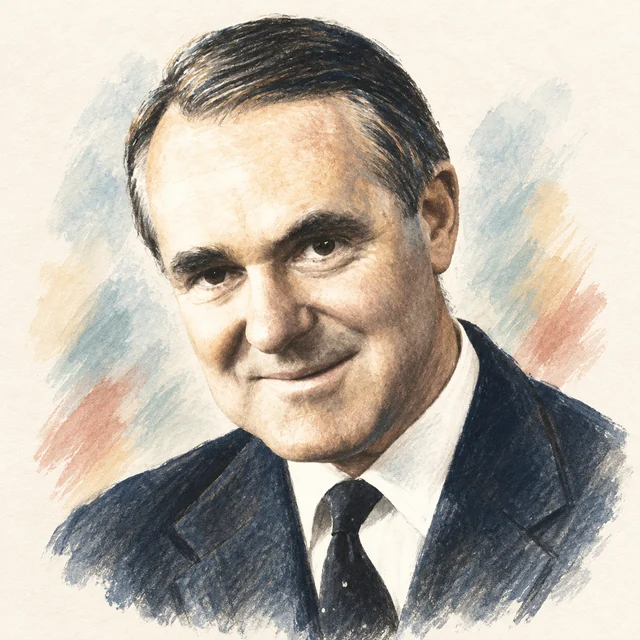
Two molecules can contain the same connected atoms yet differ in spatial arrangement. Some form mirror-related structures that cannot be superimposed, like left and right hands. Such differences matter when a molecule meets another asymmetric structure, including an enzyme. Prelog investigated these connections in organic molecules and reactions, studying natural compounds, ring structures and the relation between spatial arrangement and chemical behaviour. Stereochemistry asks more than which atoms are present: it asks how they are placed.
Read the full award story ↗