A life in context
The person behind the prize
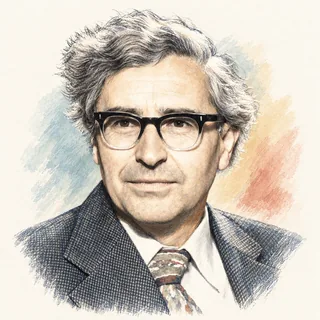
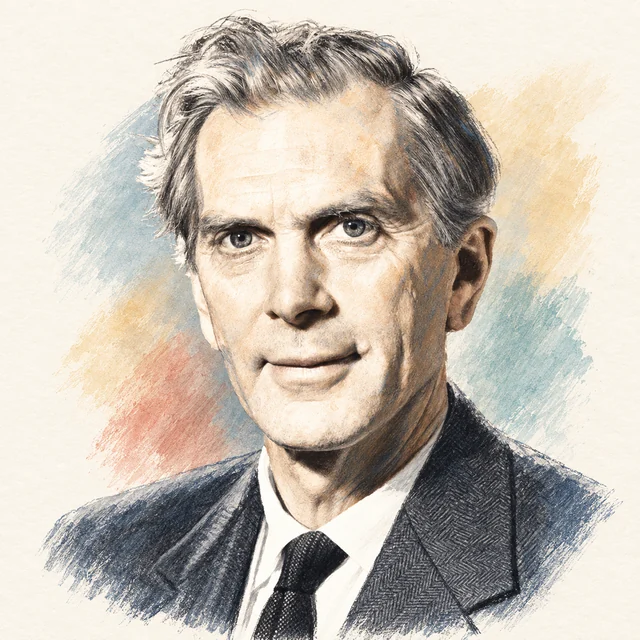
Ryle graduated from Oxford in 1939 and spent the war developing radar and other radio equipment for the Royal Air Force. In 1945 he joined the Cavendish Laboratory at Cambridge to investigate radio emission from the Sun. Engineering experience helped him connect separated antennas and develop ways of combining their measurements into detailed images of the radio sky. He became a lecturer in 1948 and Cambridge’s professor of radio astronomy in 1959. The expanding research group included Antony Hewish and many other collaborators. Ryle’s aperture-synthesis methods helped distinguish and map distant radio sources; the separation of the antennas improved angular resolution without turning the space between them into a filled collecting surface. He was appointed Astronomer Royal in 1972. The 1974 prize recognised his observations and inventions, alongside Hewish’s distinct role in pulsar discovery.
The contribution
Ryle developed radio observations and aperture synthesis, combining measurements from separated antennas to resolve celestial radio sources. He received half the Physics Prize.
The idea in plain language
A radio telescope must distinguish sources arriving from nearly the same direction. Ryle developed aperture synthesis: measurements from separated antennas, taken at different arrangements and times, are combined to reconstruct finer spatial detail. Earth’s rotation changes the orientations sampled by an array. The technique gains angular resolution from the separation of antennas; it does not collect as much energy as a filled dish covering the whole area between them.
Read the full award story ↗