A life in context
The person behind the prize
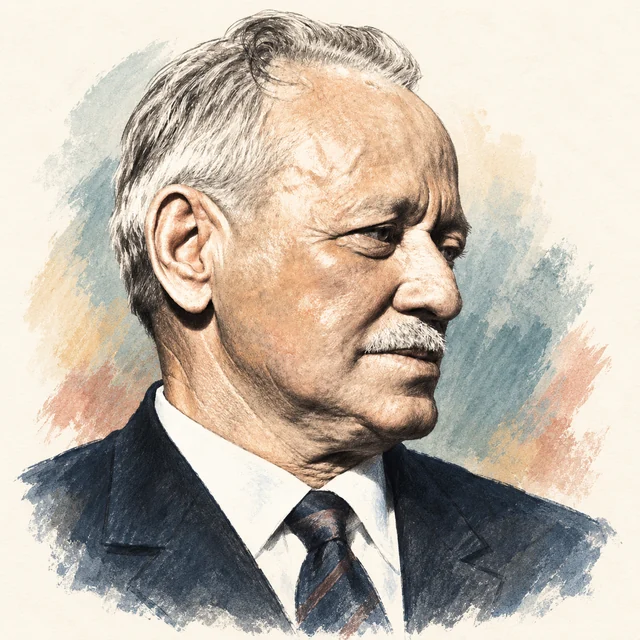
Sholokhov grew up in the Don region amid war and revolutionary change. He moved to Moscow in 1922, worked and began publishing stories, then returned to his home region in 1924. Tales from the Don, published in 1926, was a collection of stories rather than a novel. That year he began the project that became And Quiet Flows the Don, whose four parts appeared between 1928 and 1940. Its broad narrative links personal relationships, rural life and the upheavals of the First World War, revolution and civil war. Later writing included Virgin Soil Upturned, about collectivisation, and The Fate of a Man. He joined the Communist Party in 1932 and participated in Soviet public institutions. The Academy recognised the artistic power of his Don epic; the fiction remains a constructed literary perspective, rather than a complete or politically neutral history.
The contribution
Sholokhov was recognised for the artistic power of his epic of the Don. He received the full Literature Prize.
The idea in plain language
An epic novel can give historical change a human scale by following relationships, work and divided loyalties over time. Sholokhov’s And Quiet Flows the Don draws its world from the Don region and Cossack communities during the First World War, revolution and civil war.
Read the full award story ↗

