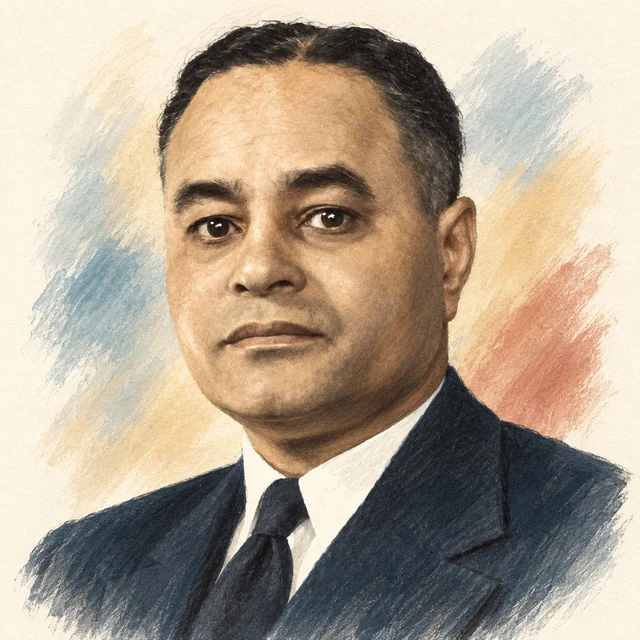
A life in context
The person behind the prize
Bunche graduated from UCLA in 1927, received a Harvard master’s degree in 1928 and completed his political-science doctorate in 1934. His education depended on scholarships, work and community support, with his grandmother’s guidance an important influence. Teaching at Howard and research on colonial administration and racial inequality preceded wartime government service. He joined the United Nations in 1946 to lead its trusteeship work. In 1948 he assisted mediator Folke Bernadotte and became acting mediator after Bernadotte’s assassination that September. He helped negotiate the 1949 armistice agreements between Israel and Egypt, Lebanon, Jordan and Syria. These ended particular hostilities without settling all political questions. The 1950 Peace Prize recognised his mediation in 1948–1949, and he became the first African American recipient of the Peace Prize. His later senior UN appointments and peacekeeping assignments belong to subsequent years. The recognition must not erase the work of UN staff or the decisions of the parties.
The contribution
As acting UN mediator following Bernadotte’s assassination, Bunche helped secure the 1949 armistice agreements. He received the full Peace Prize for mediation in Palestine in 1948–1949.
The idea in plain language
How can parties who distrust one another move from fighting toward an agreed halt? Bunche worked with UN mediator Folke Bernadotte in 1948 and took over as acting mediator after Bernadotte’s assassination in September. Patient discussion, separate exchanges with parties and attention to practicable terms helped keep negotiations moving.
Read the full award story ↗

