A life in context
The person behind the prize
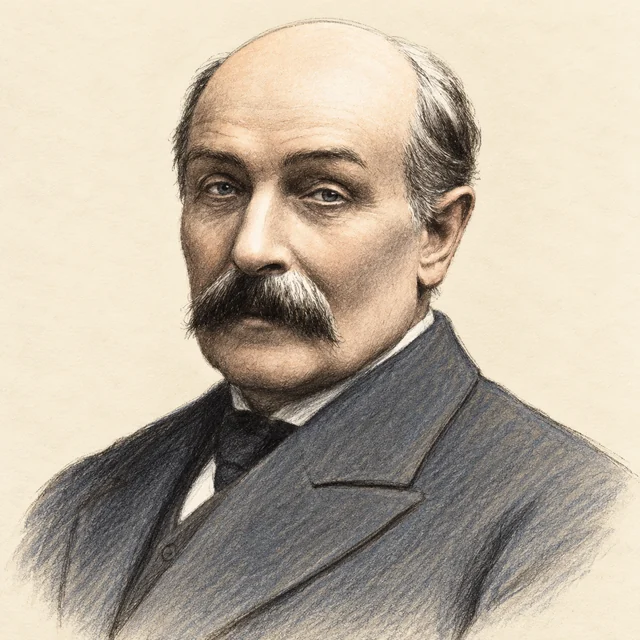
William Randal Cremer was born at Fareham in 1828. Some older accounts gave 1838, but the Nobel biography includes a correction based on a later check of the baptismal register. Trained as a carpenter, he moved to London in 1852 and became active in trade-union organising and the campaign for a nine-hour working day. He served as secretary of the First International from 1864, leaving in 1866, and increasingly concentrated on peaceful settlement of disputes between states. A neutrality committee formed during the Franco-Prussian War led to the Workmen’s Peace Association in 1871, which developed into the International Arbitration League. Cremer brought a working-class organising background to a cause often associated with diplomats and educated elites. He represented Haggerston in Parliament from 1885 to 1895 and again from 1900 until his death. In 1887 he took to United States President Grover Cleveland an arbitration proposal supported by 234 British parliamentarians. Cooperation with the French peace advocate Frédéric Passy helped bring British and French legislators together in 1888, followed by the Inter-Parliamentary Conference of 1889, the beginning of today’s Inter-Parliamentary Union. This was a method of building parliamentary support across borders, not the creation of a supranational legislature empowered to compel governments. Arbitration similarly required states to accept a process for settling disputes; it was not a guarantee that every conflict would end peacefully. Cremer received the full 1903 Peace Prize for sustained work toward international arbitration and parliamentary cooperation. He was the first sole recipient of the Peace Prize, rather than its first individual recipient: the shared 1901 award had already honoured Dunant and Passy. The historical welcome address linked by the Nobel website dates from 15 January 1905, not the December 1903 ceremony, and survives in a translation back from Norwegian newspaper text. Cremer devoted prize funds to the arbitration movement, was knighted in 1907 and died in 1908. His career shows how persistent organising could connect labour politics, national parliaments and attempts to make international conflict answerable to agreed procedures.
The contribution
Cremer promoted international arbitration and helped build cooperation among parliamentarians with Frédéric Passy. His full 1903 award was the first unshared Peace Prize; earlier shared awards had already recognised individuals.
The idea in plain language
Arbitration asks disputing states to accept a process in which an agreed third party examines a case. It depends on consent and institutional support; simply proposing it does not make governments obey or remove the political causes of conflict.
Read the full award story ↗

