A life in context
The person behind the prize
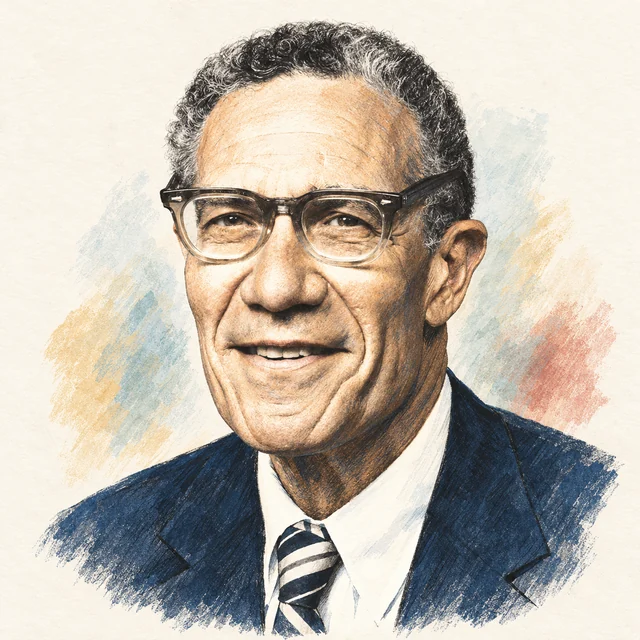
Solow grew up in Brooklyn and entered Harvard in 1940. Wartime military service interrupted his studies; returning in 1945, he worked with Wassily Leontief on input–output economics and studied statistics. He joined MIT in 1949, initially teaching statistics and econometrics. Collaboration and discussion with Paul Samuelson helped shape his macroeconomic research. His growth model appeared in 1956, followed by growth accounting in 1957. Teaching, economic policy and empirical employment research remained important in a career that extended beyond the model.
The contribution
Solow explained how capital accumulation, population growth and technological change affect long-run output. Diminishing returns mean a higher saving rate alone does not permanently raise per-worker growth in the basic model. His growth accounting distinguished contributions of measured inputs from a residual, interpreted under assumptions rather than observed directly as pure technology. He received the full memorial prize for contributions to economic growth theory.
The idea in plain language
In Solow’s basic growth model, output depends on capital and labour, and capital accumulates through saving while also depreciating. With diminishing returns, adding more capital per worker yields smaller extra increments of output. A higher saving rate can raise the eventual output level and transitional growth without permanently raising per-worker growth by itself.
Read the full award story ↗