A life in context
The person behind the prize
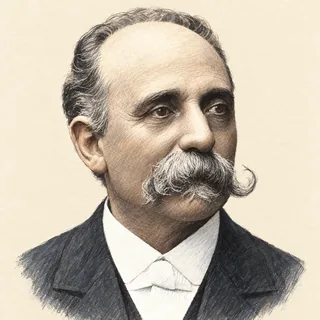
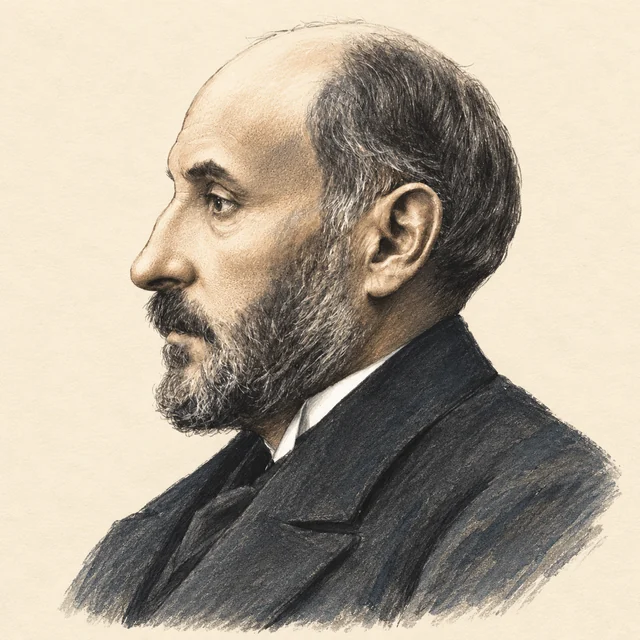
Santiago Ramón y Cajal grew up in Spain with a strong interest in drawing. His father, a physician who taught anatomy, directed him towards medicine. He graduated in Zaragoza in 1873 and served as an army doctor in Cuba in 1874–1875. Returning to Spain, he completed his doctorate in Madrid in 1877 and developed a career in anatomy and histology. He married Silvería Fañanás in 1879. Appointments in Valencia from 1883, Barcelona from 1887 and Madrid from 1892 gave him settings for an increasingly ambitious investigation of nervous tissue. Learning Golgi’s staining method in 1887 transformed the work. Cajal adapted specimen preparation, examined developing tissue and combined careful observation with detailed drawings. He argued that nerve cells were separate units rather than parts of a single continuous reticulum. Their branching processes could make contacts and establish organised routes of communication. He began a research journal in 1888; showing his preparations to Albert von Kölliker in 1889 helped win international attention. His Croonian Lecture in London took place in 1894. The drawings were interpretive scientific records based on many preparations, rather than instant photographs of every connection. Cajal also proposed principles concerning the direction of information flow through nerve cells. Histological evidence should not be confused with a direct electrical measurement of synaptic transmission or with the much later electron-microscope evidence. In 1906 he received half the Medicine Prize for nervous-system structure, sharing it with Golgi despite their different interpretations. Teaching, books, laboratory organisation and the work of a growing Spanish research school extended his influence beyond one investigator. He continued writing and researching after the award and died in Madrid in 1934. His career illustrates how technique, visual comparison and a clear structural hypothesis can change the understanding of a complex organ.
The contribution
Cajal received half the Medicine Prize for work on nervous-system structure. Using and adapting Golgi’s method, he established detailed evidence for distinct nerve cells and their organised contacts.
The idea in plain language
Golgi’s black reaction stains a small selection of nerve cells darkly, exposing cell bodies and long, fine processes against a relatively clear background. Instead of colouring everything, selective visibility lets an observer follow the shape of a few cells through complicated tissue.
Read the full award story ↗