A life in context
The person behind the prize
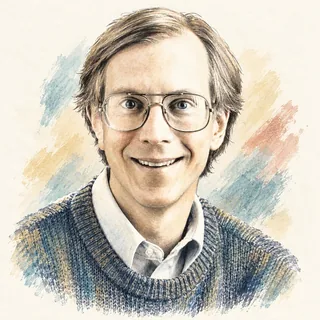
Altman grew up in Montreal in an immigrant family and studied physics at MIT, where a molecular-biology course opened another direction. After further physics study at Columbia he trained in biophysics at Colorado. Work with Matthew Meselson at Harvard and with Sydney Brenner, Francis Crick and John D. Smith in Cambridge led him to transfer-RNA precursors. He joined Yale in 1971. Research, teaching and university leadership accompanied the long investigation of ribonuclease P.
The contribution
Altman and collaborators showed that the RNA component of bacterial RNase P can catalyse removal of a leader from a transfer-RNA precursor without its protein component under suitable laboratory conditions. The 1983 paper included Cecilia Guerrier-Takada, Kathleen Gardiner, Terry Marsh and Norman Pace. Protein remains important under other conditions. This established a catalytic role for RNA, beyond carrying genetic information. Altman received half of the Chemistry Prize.
The idea in plain language
Enzymes were generally understood as proteins, while RNA was associated with carrying or translating genetic information. Two independent lines of work challenged the protein-only view of biological catalysis. Cech’s team studied a Tetrahymena ribosomal-RNA precursor. In 1982 they showed that an intron could be removed and the surrounding RNA joined after proteins were removed, with suitable ions and a guanosine cofactor.
Read the full award story ↗