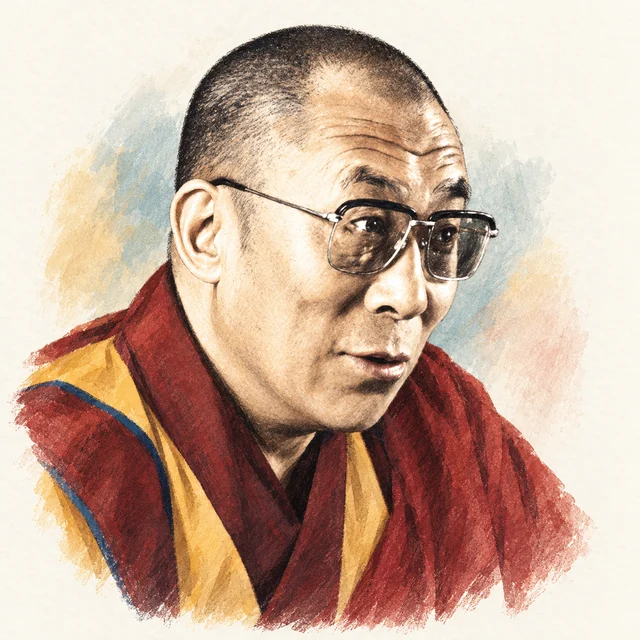
A life in context
The person behind the prize
Born in Taktser as Lhamo Thondup, he was recognised in childhood as the fourteenth Dalai Lama according to Tibetan Buddhist tradition and became known as Tenzin Gyatso. His education combined Buddhist studies with preparation for leadership. He assumed political responsibilities in 1950 and fled to India in 1959 after an uprising in Tibet. From exile he advocated Tibetan cultural rights and peaceful negotiation. His 1987 Five Point Peace Plan and 1988 Strasbourg proposal set out approaches to dialogue; these were proposals, not implemented settlements.
The contribution
The Norwegian Nobel Committee honoured his sustained opposition to violence in the struggle concerning Tibet and his advocacy of peaceful solutions through tolerance and mutual respect. It also emphasised concern for cultural heritage, living beings and nature. The award recognised an approach to conflict, not a resolution of Tibet’s disputed political status. His religious and political roles here describe the period of the 1989 award.
The idea in plain language
The Norwegian Nobel Committee recognised the fourteenth Dalai Lama’s opposition to violence in the struggle concerning Tibet. Living in exile in India since 1959, he argued for peaceful solutions through tolerance and mutual respect. His approach connected Tibetan cultural rights with a wider sense of responsibility for people, other living beings and nature.
Read the full award story ↗

