c.curionodeThe Nobel Archive

1913 · Literature

Recast poetic thought across languages

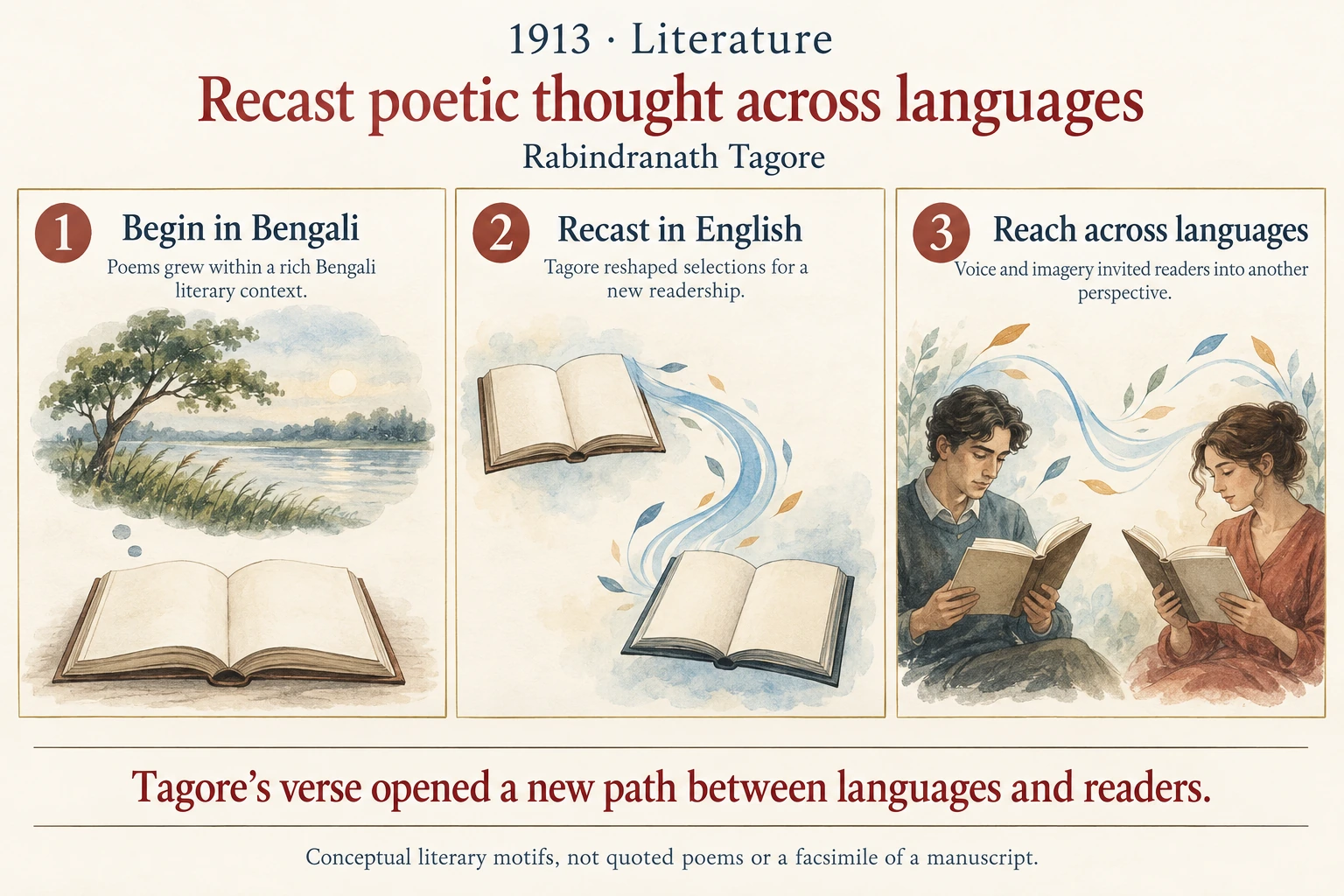
Tagore brought a Bengali literary imagination to English readers through his own recastings. The 1913 prize recognised verse whose imagery, feeling and form could speak across a linguistic boundary.

PoetryBengali literatureLiterary recasting
1913Literature

Visual guide

The prize, pictured

Infographic explaining Recast poetic thought across languages
Original AI-generated infographic. A conceptual overview; the explanations and sources below provide context.
Read the poster text

Tagore’s verse opened a new path between languages and readers.

  1. Begin in Bengali

    Poems grew within a rich Bengali literary context.

  2. Recast in English

    Tagore reshaped selections for a new readership.

  3. Reach across languages

    Voice and imagery invited readers into another perspective.

Conceptual literary motifs, not quoted poems or a facsimile of a manuscript.

01 · The contribution

The idea, in everyday language

The English Gitanjali: Song Offerings, published in 1912, drew on poems from several Bengali collections. Tagore reshaped them in English prose-poetic form. It was not an exact volume-for-volume translation of the Bengali Gitanjali of 1910. That distinction matters: the English book was a selection and a new act of expression, while the Bengali originals retained their own forms and contexts.

The Nobel presentation especially discussed Gitanjali and also The Gardener of 1913. Images of nature, human relationships, spiritual address and ordinary experience brought different registers into his poetry. His writing reached readers beyond Bengal through language, publication and literary exchange. The award concerned the verse and its expression, without making Tagore the representative voice of every Indian culture or belief.

Why it matters

The English recastings created a path between a substantial Bengali literary career and new international readers. Tagore’s achievement shows how translation and an author’s own reworking can become creative literary acts, with their own history of reception.

02 · The people

Who brought the idea to life?

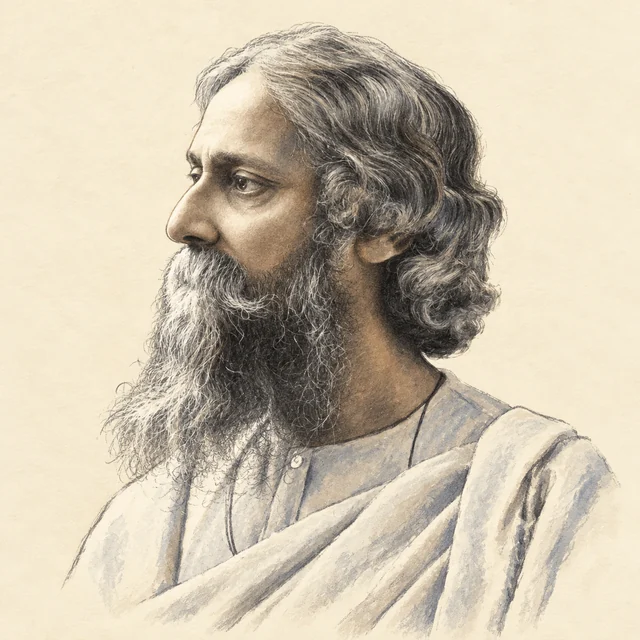
Illustrated portrait of Rabindranath Tagore

Rabindranath Tagore

Prize share · 1

Tagore received the full Literature Prize for his verse and the English expression of his poetic thought. His own recastings, especially Gitanjali: Song Offerings, brought a Bengali literary imagination into a new readership without replacing its original language and context.

Read the biography ↗

03 · Years in the making

The path here

  1. 1861

    Tagore is born in Calcutta.

  2. 1890

    Manasi is published in Bengali.

  3. 1901

    He founds an experimental school at Santiniketan.

  4. 1910

    The Bengali Gitanjali appears.

  5. 1912

    Gitanjali: Song Offerings appears in English.

  6. 1913

    He receives the full Literature Prize.

04 · Read further

From the original sources

Original explanations by Curionode, based on the official records below. Biographical details and affiliations refer to the award year.

  1. Official award summary nobelprize.org
  2. Award ceremony speech nobelprize.org
  3. Visva-Bharati: English works and translation bibliography visvabharati.ac.in

More in Literature

Browse this subject ↗