01 · The contribution
The idea, in everyday language
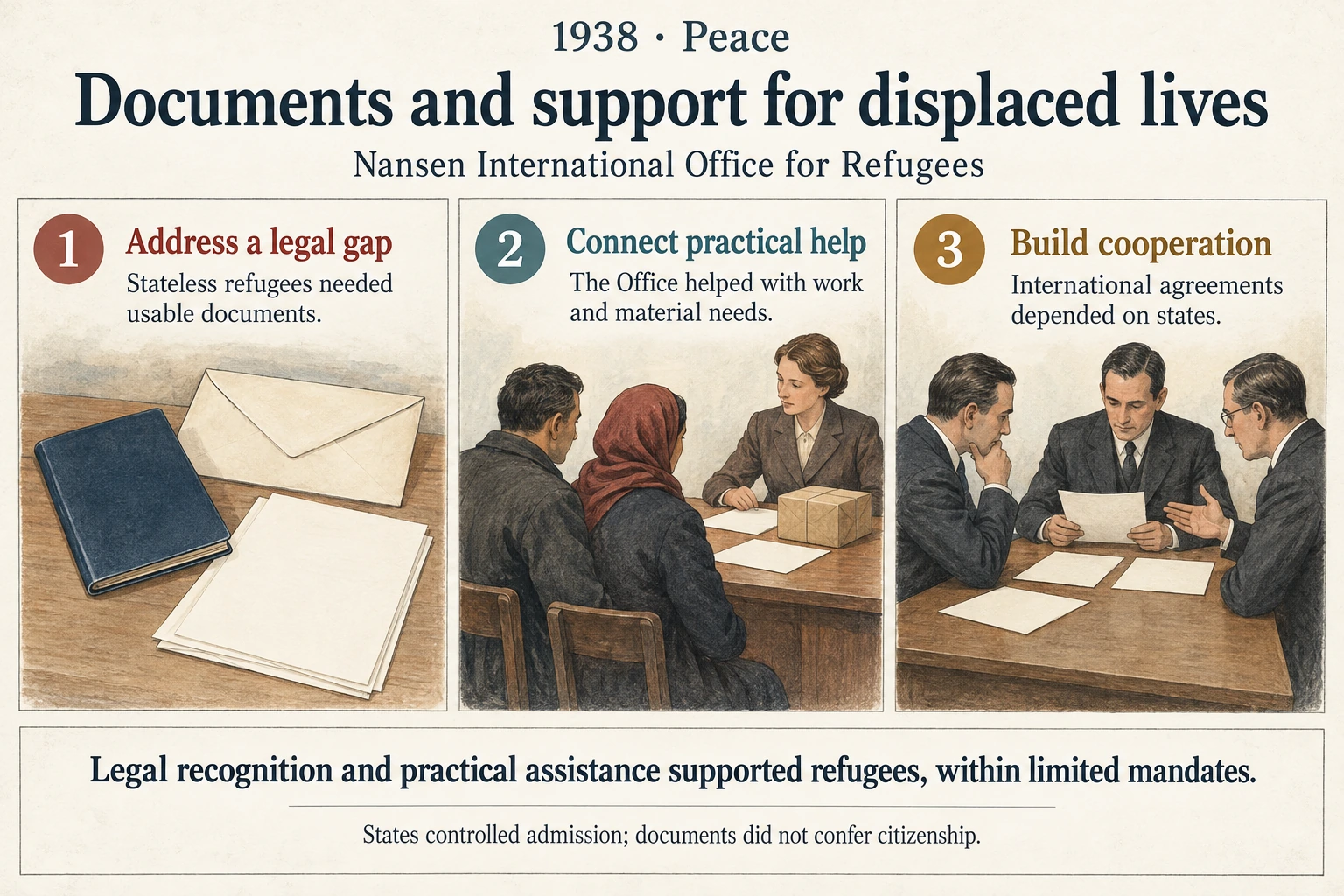
Losing the protection of a state could leave a refugee without usable identity and travel documents as well as without work or shelter. The Nansen Office continued earlier refugee work through certificates, assistance and cooperation with governments and voluntary organisations. It helped people navigate administrative obstacles and practical needs, rather than treating displacement as only a question of food relief.
Its work included refugees from several designated groups and places, and support for the 1933 Refugee Convention. It operated under a defined mandate, with limited money and dependence on states. The economic depression and new waves of displacement made the task harder. A document could help a person deal with institutions and travel, but it did not itself grant citizenship or force another country to admit its holder.
Why it matters
The office helped establish refugee protection as a continuing international responsibility, linking documents with material and legal assistance. Its achievements depended on staff, voluntary support and government cooperation. The prize honoured the organisation’s continuation of Nansen’s work; it did not mean the refugee crisis had ended or that its limited mandate covered everyone displaced in the 1930s.