c.curionodeThe Nobel Archive

1939 · Literature

Make rural lives matter on the page

Sillanpää brought Finnish rural experience into a close literary relationship with nature, poverty, time and human vulnerability.

Finnish fictionRural lifeNatureLiterary attention
1939Literature

Visual guide

The prize, pictured

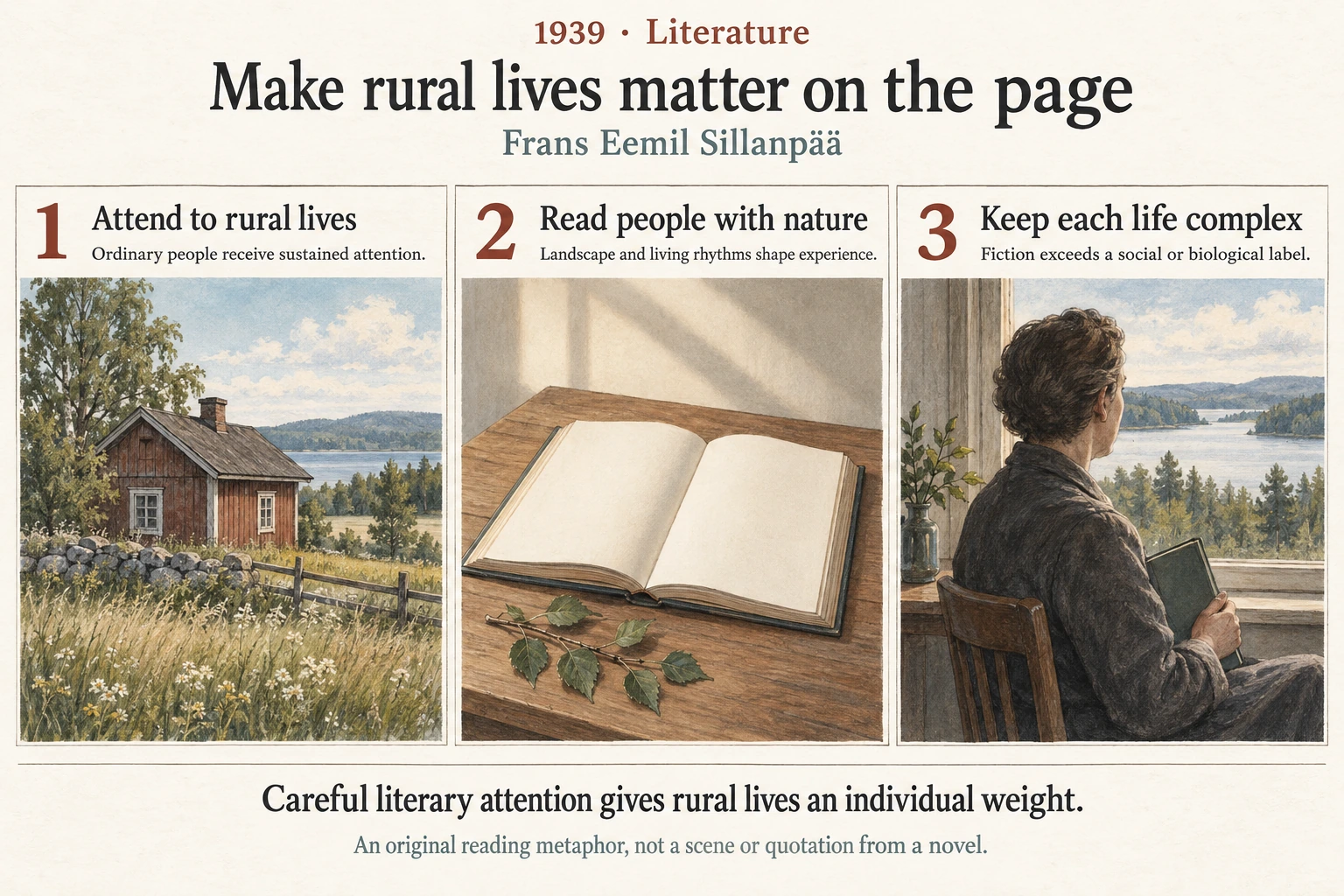
Infographic explaining Make rural lives matter on the page
Original AI-generated infographic. A conceptual overview; the explanations and sources below provide context.
Read the poster text

Careful literary attention gives rural lives an individual weight.

  1. Attend to rural lives

    Ordinary people receive sustained attention.

  2. Read people with nature

    Landscape and living rhythms shape experience.

  3. Keep each life complex

    Fiction exceeds a social or biological label.

An original reading metaphor, not a scene or quotation from a novel.

01 · The contribution

The idea, in everyday language

How can fiction give full attention to lives that public history often treats only as a crowd? Sillanpää made rural people the centre of sustained artistic observation. His scientific interests informed a sense of human beings within living nature, while his prose attended to the textures and rhythms of ordinary experience. Nature was more than scenery, but people were not merely specimens in an experiment.

The body of work before 1939 included Life and Sun (1916), Meek Heritage (1919), The Maid Silja (1931) and People in the Summer Night (1934). Meek Heritage follows a poor tenant farmer through a life ending amid the 1918 Civil War. It combines recognisable local settings with fiction; a historian’s comparison with archival records shows why it cannot simply be used as a factual biography. The Nobel citation recognised Sillanpää’s understanding of Finnish peasant life and the art of portraying its relationship with nature.

Why it matters

Sillanpää gave rural Finnish lives sustained artistic weight and made their relation to the living world accessible beyond Finnish through translation. The achievement rests in the writing, not in proving a biological theory or providing a neutral statistical survey. The award honoured a body of work rather than declaring a single novel a complete account of Finland.
02 · The people

Who brought the idea to life?

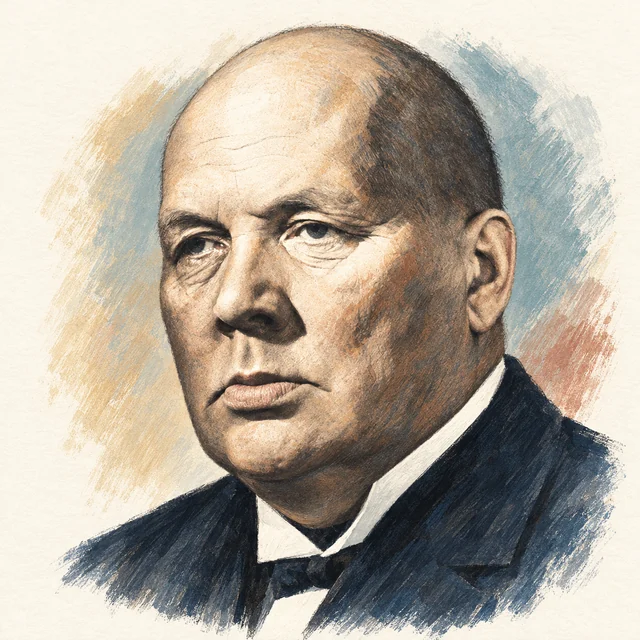
Illustrated portrait of Frans Eemil Sillanpää

Frans Eemil Sillanpää

Prize share · 1

Sillanpää received the whole Literature Prize for his understanding and artistic portrayal of Finnish peasant life and its relationship with nature. The award recognised a body of work.

Read the biography ↗

03 · Years in the making

The path here

  1. 1908

    Sillanpää begins university study in Helsinki.

  2. 1913

    He returns home without completing a degree.

  3. 1916

    Life and Sun appears.

  4. 1919

    Meek Heritage is published.

  5. 1931

    The Maid Silja appears.

  6. 1934

    People in the Summer Night appears.

  7. 1939

    The Academy addresses the laureate at its 14 December meeting.

04 · Read further

From the original sources

Original explanations by Curionode, based on the official records below. Biographical details and affiliations refer to the award year.

  1. Official award summary nobelprize.org
  2. Award ceremony speech nobelprize.org
  3. Official bibliography nobelprize.org
  4. University of Turku: fiction and archival evidence blogit.utu.fi
  5. Official biography: Frans Eemil Sillanpää nobelprize.org

More in Literature

Browse this subject ↗