A life in context
The person behind the prize
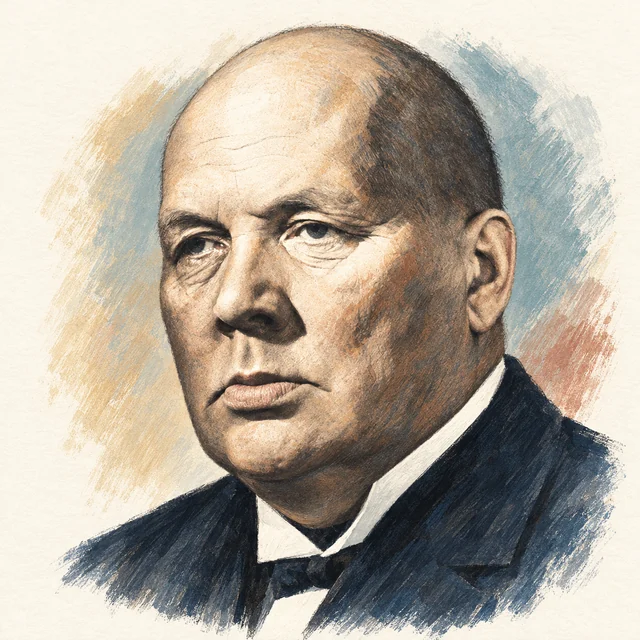
Sillanpää grew up in a poor rural household in Hämeenkyrö. Support for his schooling took him to Tampere and then, in 1908, to university study in Helsinki. Biology shaped his interests, but his studies did not lead to a degree. He returned home in 1913 and began publishing stories. His first novel, Elämä ja aurinko (Life and Sun), appeared in 1916. Hurskas kurjuus (Meek Heritage, 1919) connected a poor tenant farmer’s life with Finland’s 1918 Civil War; it is a novel, not a documentary biography. Nuorena nukkunut (The Maid Silja, 1931) and Ihmiset suviyössä (People in the Summer Night, 1934) were further major works before the award. His attention to rural experience joined close observation of people with seasons, landscape and biological life. The whole 1939 Literature Prize recognised this wider achievement rather than one book alone. On 14 December 1939 the Swedish Academy addressed him at its regular meeting, after the usual public celebrations had been curtailed. Later radio memoirs and books belong to a subsequent period.
The contribution
Sillanpää received the whole Literature Prize for his understanding and artistic portrayal of Finnish peasant life and its relationship with nature. The award recognised a body of work.
The idea in plain language
How can fiction give full attention to lives that public history often treats only as a crowd? Sillanpää made rural people the centre of sustained artistic observation. His scientific interests informed a sense of human beings within living nature, while his prose attended to the textures and rhythms of ordinary experience. Nature was more than scenery, but people were not merely specimens in an experiment.
Read the full award story ↗

