c.curionodeThe Nobel Archive

1946 · Peace

Build peace through research, relationships and service

Balch and Mott received separate halves of the Peace Prize for different approaches to international understanding and sustained practical work.

Peace advocacySocial investigationInternational cooperationHumanitarian service
1946Peace

Visual guide

The prize, pictured

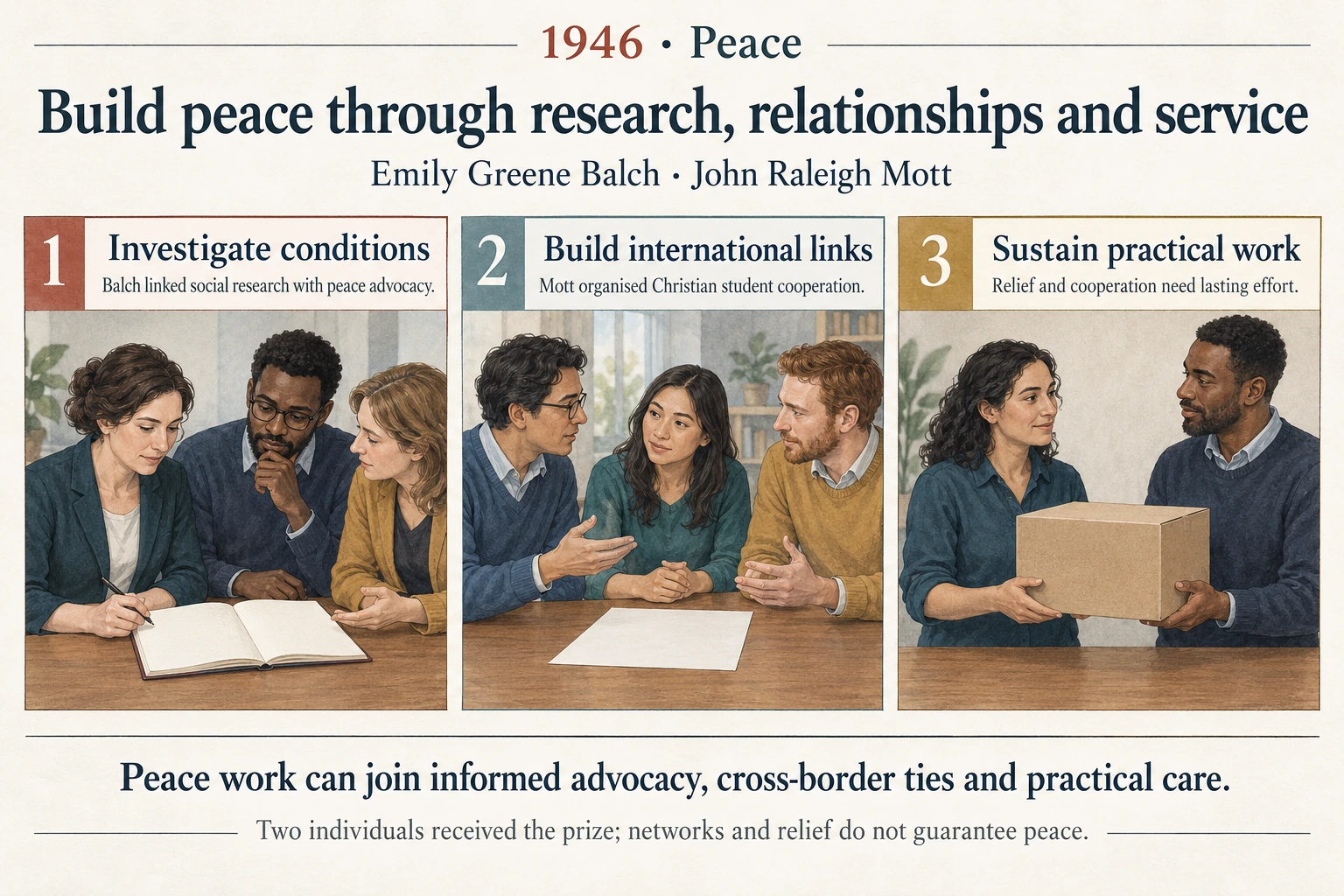
Infographic explaining Build peace through research, relationships and service
Original AI-generated infographic. A conceptual overview; the explanations and sources below provide context.
Read the poster text

Peace work can join informed advocacy, cross-border ties and practical care.

  1. Investigate conditions

    Balch linked social research with peace advocacy.

  2. Build international links

    Mott organised Christian student cooperation.

  3. Sustain practical work

    Relief and cooperation need lasting effort.

Two individuals received the prize; networks and relief do not guarantee peace.

01 · The contribution

The idea, in everyday language

Peace work depends on more than agreement at a negotiating table. Emily Greene Balch linked social investigation with international women’s organising, mediation proposals, refugee support and advocacy for cooperation. Her research on migration and her investigation of conditions in Haiti exemplified an effort to ground proposals in observed circumstances.

John Raleigh Mott developed Christian student and service networks across national and denominational boundaries. Through the World’s Student Christian Federation, YMCA work and missionary cooperation, he sought relationships that could sustain understanding; wartime work also supported prisoners of war. The 1946 award recognised two individuals with distinct careers, rather than a single joint project or prizes for their organisations.

Why it matters

Balch’s work made international organising a field for women whose proposals were often excluded from official decision-making. Mott’s work built institutional channels for Christian contact and service across borders. Their careers show several routes into peace activity, including research, advocacy, education and relief, each involving many collaborators rather than isolated heroes.
02 · The people

Who brought the idea to life?

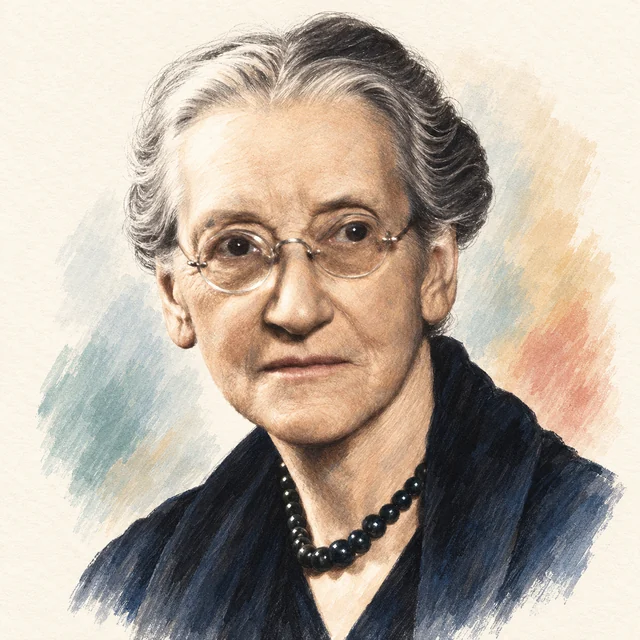
Illustrated portrait of Emily Greene Balch

Emily Greene Balch

Prize share · 1/2

Balch connected social investigation, international women’s organisation and persistent peace advocacy. She received half of the Peace Prize as an individual; WILPF was the setting for much of her work rather than an additional laureate.

Read the biography ↗
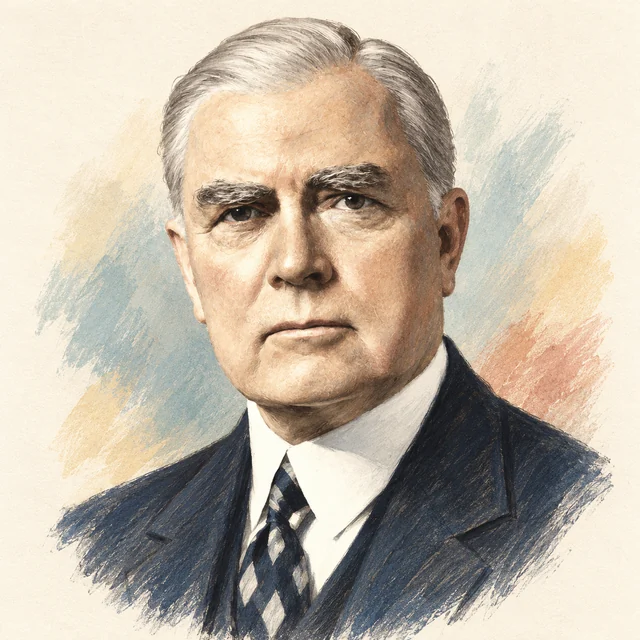
Illustrated portrait of John Raleigh Mott

John Raleigh Mott

Prize share · 1/2

Mott built international Christian student and service networks that sought understanding across national divisions. He received half of the Peace Prize as an individual, separately from Balch’s half for her work.

Read the biography ↗

03 · Years in the making

The path here

  1. 1888

    Mott graduates from Cornell and begins sustained student YMCA work.

  2. 1889

    Balch graduates from Bryn Mawr.

  3. 1895

    Mott and Karl Fries help organise the World’s Student Christian Federation.

  4. 1915

    Balch participates in the women’s congress at The Hague.

  5. 1918

    Wellesley ends Balch’s appointment amid opposition to her views.

  6. 1926

    Balch investigates Haiti; Mott begins the YMCA presidency recorded by the World Alliance.

  7. 1946

    Balch and Mott receive equal shares of the Peace Prize.

04 · Read further

From the original sources

Original explanations by Curionode, based on the official records below. Biographical details and affiliations refer to the award year.

  1. Official award summary nobelprize.org
  2. Award ceremony speech nobelprize.org
  3. World YMCA: historical presidents and Mott’s tenure ymca.int
  4. World Council of Churches: Mott’s later 1948 role oikoumene.org
  5. Official biography: Emily Greene Balch nobelprize.org
  6. Official biography: John Raleigh Mott nobelprize.org