c.curionodeThe Nobel Archive

1962 · Peace

Scientific responsibility and the nuclear arms race

Pauling’s campaign connected public warnings about nuclear testing with efforts toward international agreement.

Scientific responsibilityNuclear test-ban advocacyInternational agreement
1962Peace

Visual guide

The prize, pictured

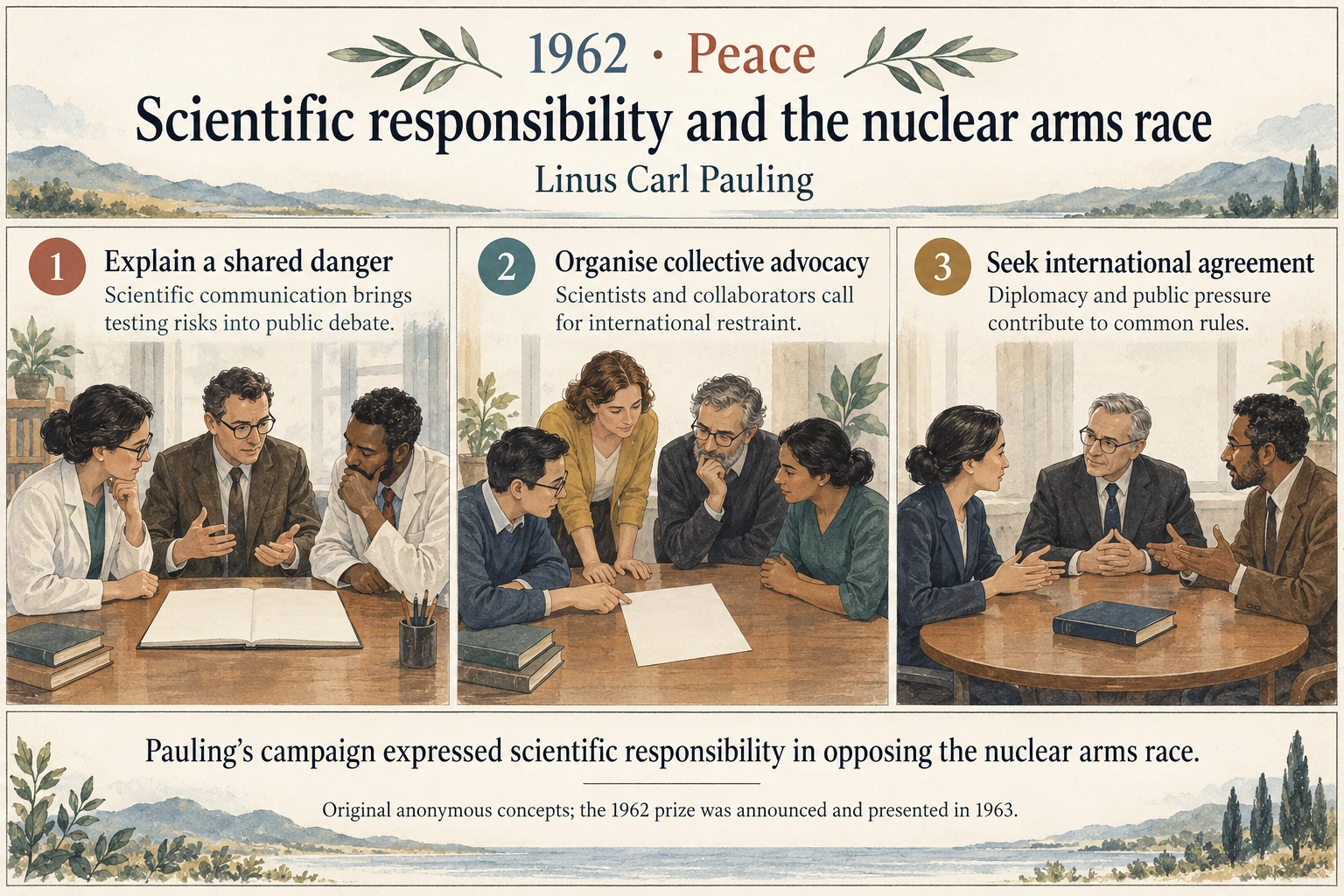
Infographic explaining Scientific responsibility and the nuclear arms race
Original AI-generated infographic. A conceptual overview; the explanations and sources below provide context.
Read the poster text

Pauling’s campaign expressed scientific responsibility in opposing the nuclear arms race.

  1. Explain a shared danger

    Scientific communication brings testing risks into public debate.

  2. Organise collective advocacy

    Scientists and collaborators call for international restraint.

  3. Seek international agreement

    Diplomacy and public pressure contribute to common rules.

Original anonymous concepts; the 1962 prize was announced and presented in 1963.

01 · The contribution

The idea, in everyday language

Nuclear weapons and testing posed dangers that crossed borders. During the Cold War, explaining fallout risks and arguing for restraint required scientific communication, public engagement and diplomacy.

Pauling spoke and wrote against the nuclear arms race and advocated agreements to stop testing. Ava Helen Pauling and fellow scientists contributed to organising and communication, including the petition delivered to the United Nations in 1958. His scientific reputation supported the campaign, which encountered strong political opposition.

Why it matters

The prize recognised his opposition to the East–West nuclear arms race. The 1962 prize had been reserved and was announced on 10 October 1963, then presented that December. It remains the 1962 award. The Limited Test Ban Treaty was formally signed on 5 August 1963 and entered into force on 10 October; governments, diplomats and many advocates contributed.

02 · The people

Who brought the idea to life?

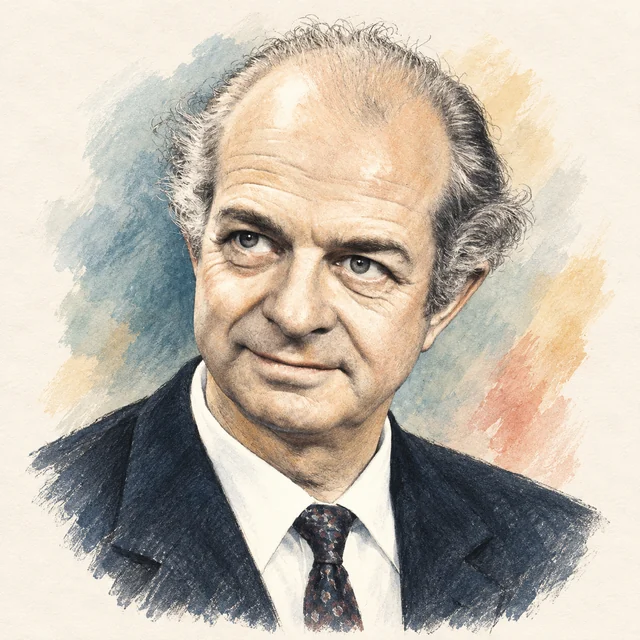
Illustrated portrait of Linus Carl Pauling

Linus Carl Pauling

Prize share · 1

Pauling campaigned against the East–West nuclear arms race and nuclear testing. He received the full 1962 Peace Prize, announced and presented in 1963.

Read the biography ↗

03 · Years in the making

The path here

  1. 1925

    Pauling completes his Caltech doctorate.

  2. 1946

    He participates in the Emergency Committee of Atomic Scientists.

  3. 1954

    He receives the separate Chemistry Prize.

  4. 1958

    The scientists’ petition reaches the United Nations; No More War! appears.

  5. 1962

    The Peace Prize is reserved for the following year.

  6. 1963

    The treaty is signed and takes effect; Pauling’s 1962 prize is announced and presented.

04 · Read further

From the original sources

Original explanations by Curionode, based on the official records below. Biographical details and affiliations refer to the award year.

  1. Official award summary nobelprize.org
  2. Award ceremony speech nobelprize.org
  3. National Archives test-ban treaty archives.gov
  4. JFK Library treaty chronology jfklibrary.org
  5. Official biography: Linus Carl Pauling nobelprize.org