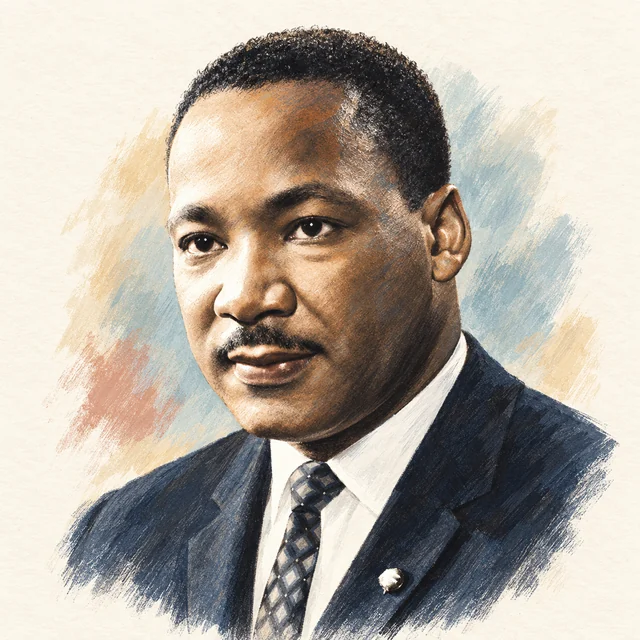
A life in context
The person behind the prize
King graduated from Morehouse in 1948, completed theological study at Crozer in 1951 and received his Boston University doctorate in 1955. He became pastor of Dexter Avenue Baptist Church in Montgomery in 1954. Rosa Parks’s arrest and community organising led to the bus boycott in 1955, with King elected to lead the Montgomery Improvement Association. In 1957 he became president of the Southern Christian Leadership Conference. His Christian commitments and study of Gandhi supported nonviolent resistance as active collective struggle. Birmingham protests and the March on Washington in 1963 brought national attention to segregation and injustice. The Civil Rights Act became law in July 1964, while discrimination and enforcement problems persisted. The Peace Prize recognised his nonviolent civil-rights struggle. His later campaigns, anti-war work and 1968 assassination are subsequent history.
The contribution
King was recognised for nonviolent struggle for African American civil rights, within a broad collective movement. He received the full Peace Prize.
The idea in plain language
Segregation and unequal treatment denied African Americans equal opportunities and access. Communities used organising, legal challenges, boycotts and demonstrations to confront this system. Nonviolence was an active strategy of resistance, rather than acceptance of injustice.
Read the full award story ↗

