c.curionodeThe Nobel Archive

1964 · Peace

Nonviolent struggle for civil rights

King’s Peace Prize recognised nonviolent resistance against racial segregation and discrimination within a broad civil-rights movement.

Civil rightsNonviolent resistanceCollective action
1964Peace

Visual guide

The prize, pictured

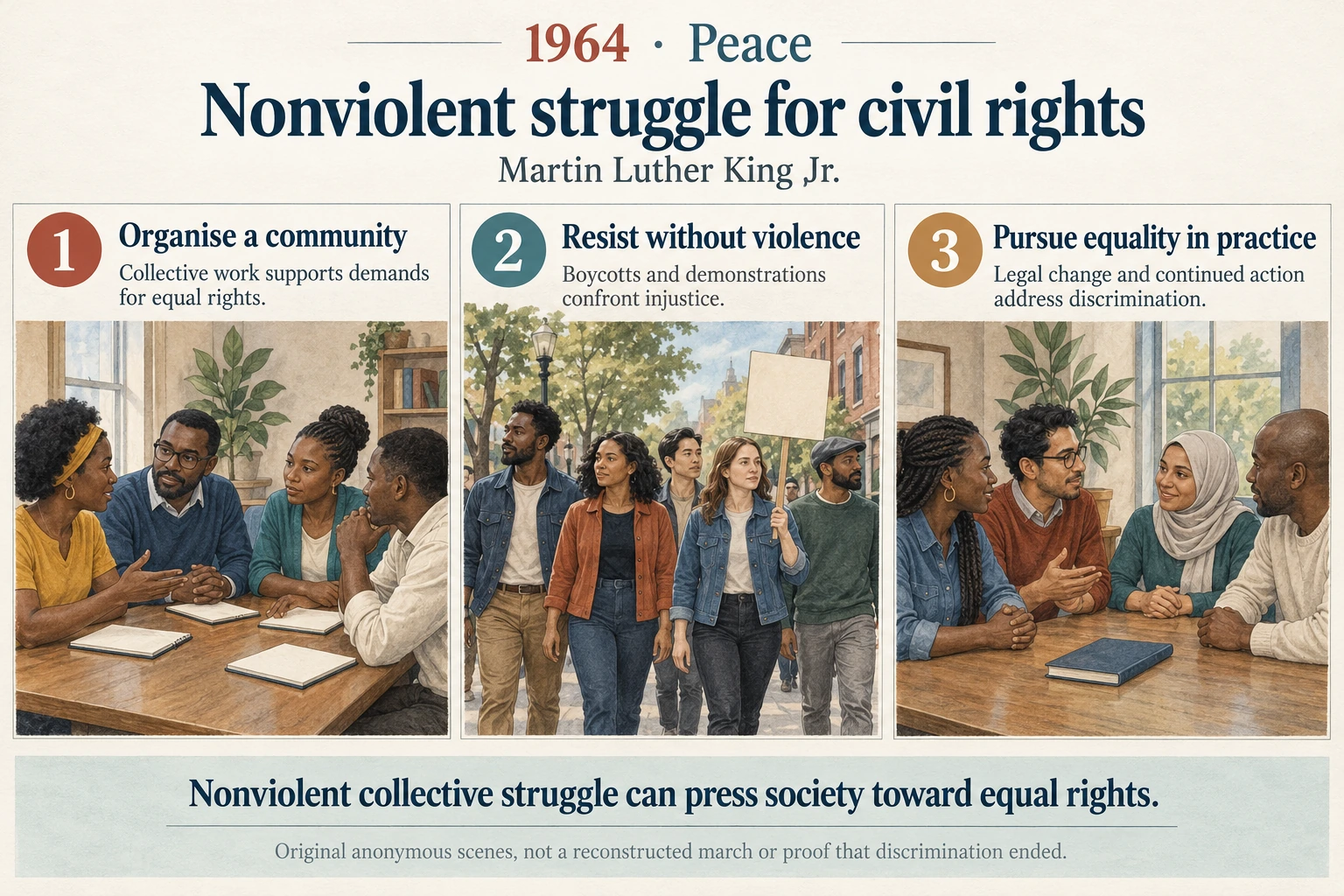
Infographic explaining Nonviolent struggle for civil rights
Original AI-generated infographic. A conceptual overview; the explanations and sources below provide context.
Read the poster text

Nonviolent collective struggle can press society toward equal rights.

  1. Organise a community

    Collective work supports demands for equal rights.

  2. Resist without violence

    Boycotts and demonstrations confront injustice.

  3. Pursue equality in practice

    Legal change and continued action address discrimination.

Original anonymous scenes, not a reconstructed march or proof that discrimination ended.

01 · The contribution

The idea, in everyday language

Segregation and unequal treatment denied African Americans equal opportunities and access. Communities used organising, legal challenges, boycotts and demonstrations to confront this system. Nonviolence was an active strategy of resistance, rather than acceptance of injustice.

King became a leading voice through the Montgomery bus boycott, sparked by Rosa Parks’s arrest and sustained by community organisers. As Southern Christian Leadership Conference president, he helped mobilise campaigns and articulate a moral case for equal rights. Birmingham and the March on Washington in 1963 brought further national attention.

Why it matters

The award recognised King’s commitment to nonviolent civil-rights struggle. The Civil Rights Act was signed on 2 July 1964, addressing discrimination in public accommodations, employment and other defined areas. King accepted the full prize in the name of a wider movement; other organisers, participants and legal work were essential.

02 · The people

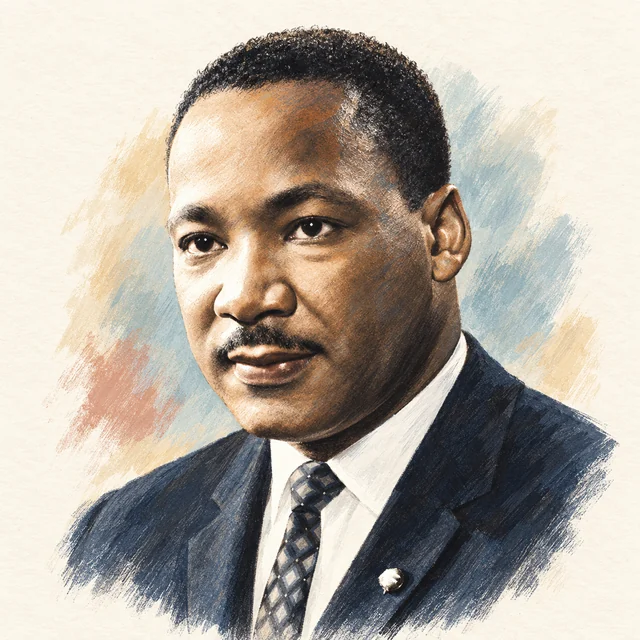
Who brought the idea to life?

03 · Years in the making

The path here

  1. 1948

    King graduates from Morehouse College.

  2. 1954

    He becomes pastor in Montgomery.

  3. 1955–1956

    The Montgomery bus boycott challenges segregation.

  4. 1957

    King becomes president of the Southern Christian Leadership Conference.

  5. 1963

    Birmingham protests and the March on Washington draw national attention.

  6. 1964

    The Civil Rights Act becomes law; King receives the Peace Prize.

04 · Read further

From the original sources

Original explanations by Curionode, based on the official records below. Biographical details and affiliations refer to the award year.

  1. Official award summary nobelprize.org
  2. Award ceremony speech nobelprize.org
  3. National Archives Civil Rights Act history archives.gov
  4. National Archives Voting Rights Act history archives.gov
  5. Official biography: Martin Luther King Jr. nobelprize.org