01 · The contribution
The idea, in everyday language
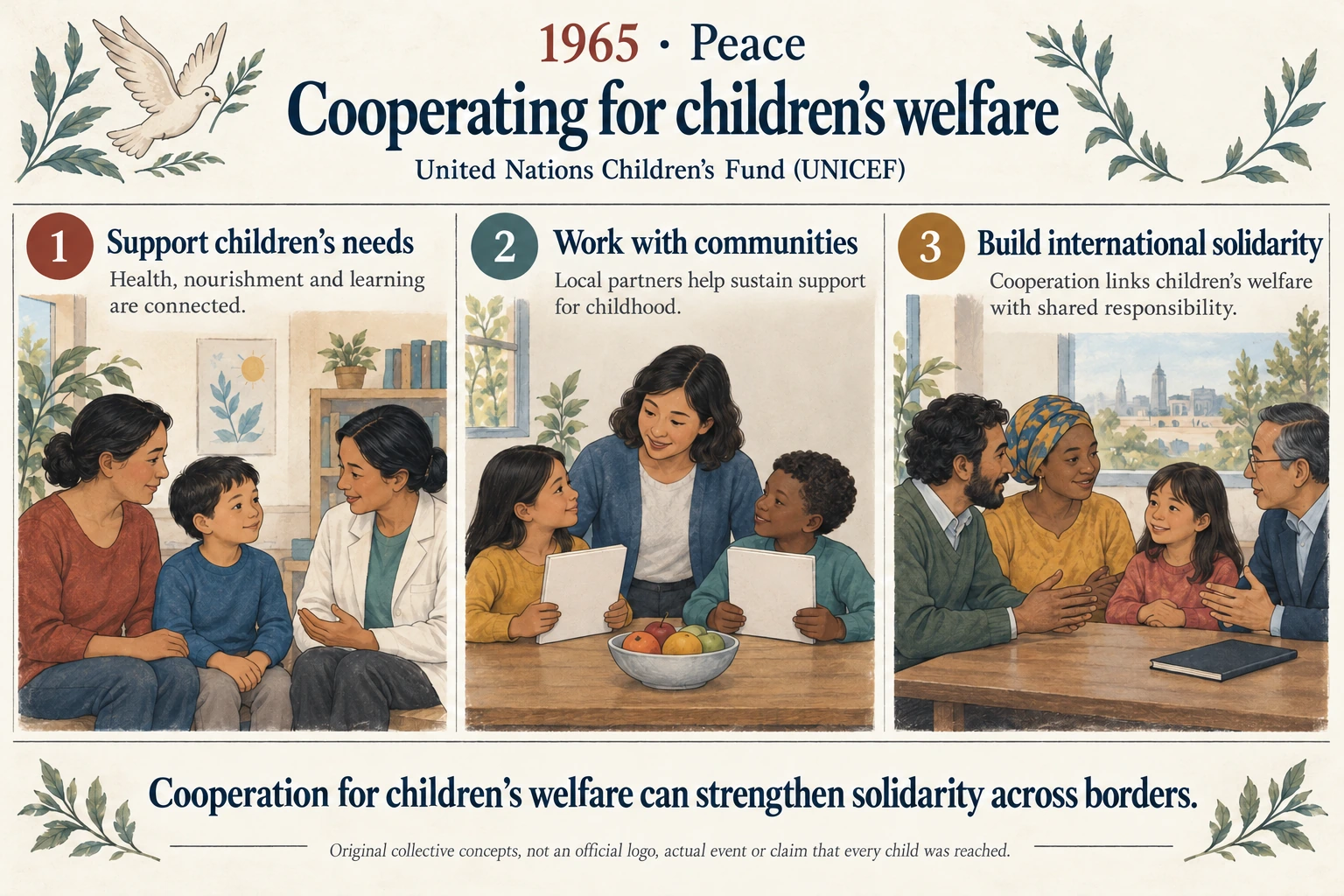
War and unequal access to resources left many children without adequate nutrition, health care or education. UNICEF began in 1946 with emergency aid and broadened toward longer-term support as a permanent UN organisation in 1953.
By the award period, its work linked children’s needs with national development and local cooperation. Governments, communities and organisations such as WHO, FAO and UNESCO were partners in health, nourishment and education. The prize honoured an organisation’s sustained work, rather than an individual director or a single charitable donation.
Why it matters
The recognition connected children’s welfare with solidarity across national borders. Supporting childhood could strengthen shared responsibility and reduce disparities. Henry Labouisse accepted on UNICEF’s behalf, while the organisation itself received the full prize.