c.curionodeThe Nobel Archive

1972 · Literature

Giving postwar lives a literary voice

Heinrich Böll brought a broad view of his time together with close attention to individual characters. War, poverty and social pressure entered fiction through the experiences of ordinary people.

Postwar literatureCharacterisationSocial perspective
1972Literature

Visual guide

The prize, pictured

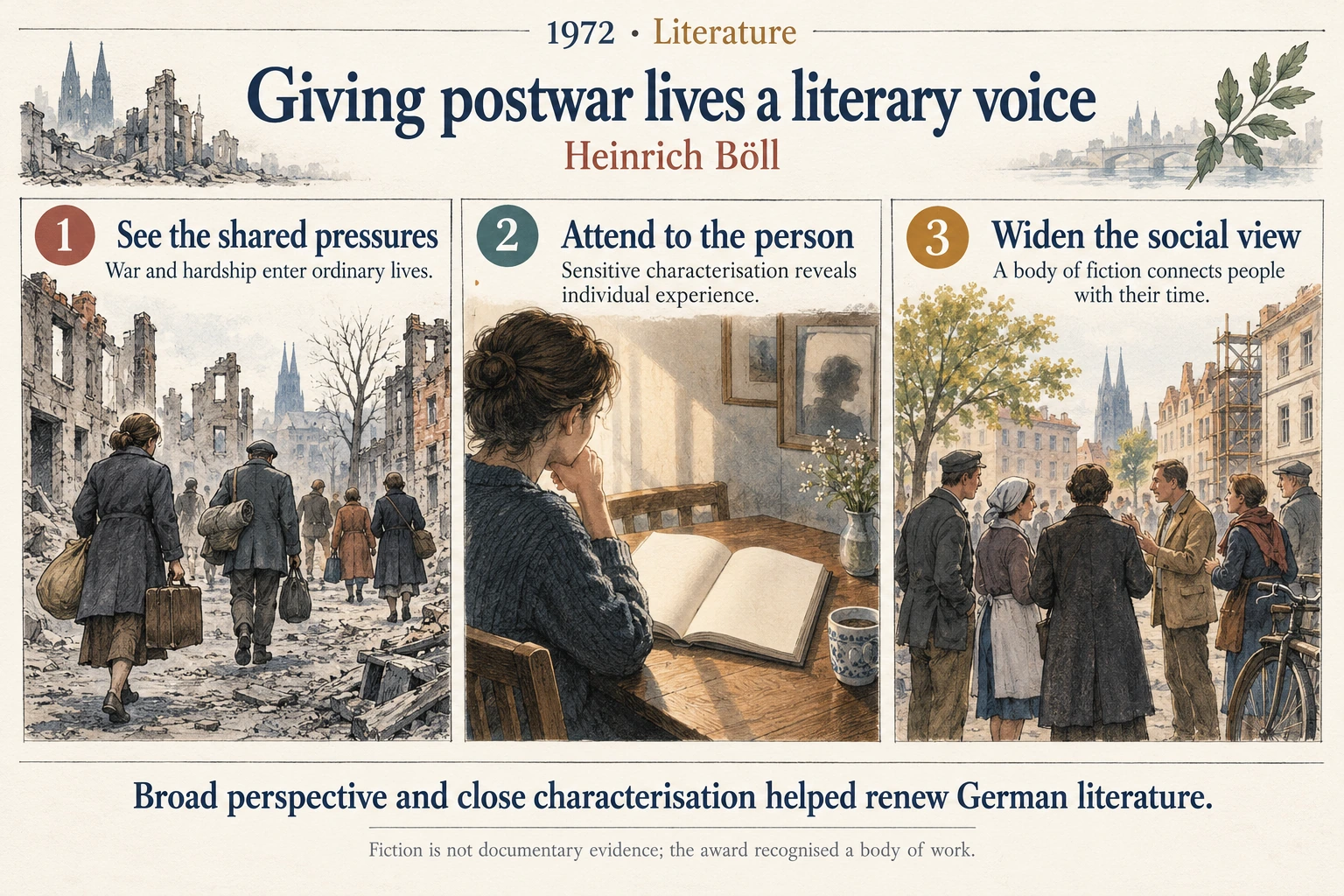
Infographic explaining Giving postwar lives a literary voice
Original AI-generated infographic. A conceptual overview; the explanations and sources below provide context.
Read the poster text

Broad perspective and close characterisation helped renew German literature.

  1. See the shared pressures

    War and hardship enter ordinary lives.

  2. Attend to the person

    Sensitive characterisation reveals individual experience.

  3. Widen the social view

    A body of fiction connects people with their time.

Fiction is not documentary evidence; the award recognised a body of work.

01 · The contribution

The idea, in everyday language

Early works, including The Train Was on Time, explore war’s futility and the vulnerability of people caught within it. Postwar novels examine strained family life, material hardship and the distance between public respectability and private experience. Böll’s perspective changes across works rather than reducing his characters to one social lesson.

Group Portrait with a Lady, published in 1971, draws many lives into a larger picture. The Academy’s 1972 account emphasised the renewal of German literature through this broad perspective and sensitive characterisation. The award recognised an evolving body of work, rather than a claim that one novelist represented everyone or invented postwar writing.

Why it matters

Böll’s fiction made damaged lives and moral tensions visible within postwar German literature. The recognised achievement joins historical awareness to character, allowing readers to encounter the effects of large events through ordinary experience.
02 · The people

Who brought the idea to life?

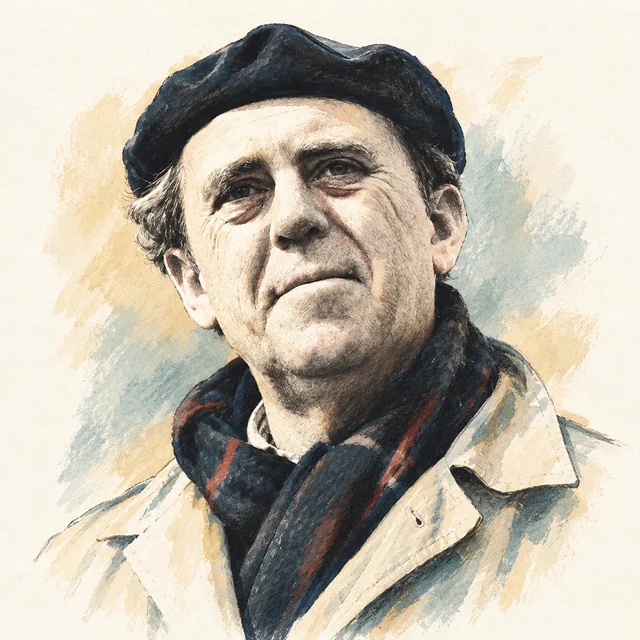
Illustrated portrait of Heinrich Böll

Heinrich Böll

Prize share · 1

Böll’s broad view of his time and sensitive characterisation helped renew German literature. He received the entire Literature Prize.

Read the biography ↗

03 · Years in the making

The path here

  1. 1945

    Böll returned to devastated Cologne after war and captivity.

  2. 1949

    The Train Was on Time was published.

  3. 1951

    Group 47 connected him with other postwar writers.

  4. 1971

    Group Portrait with a Lady appeared.

  5. 1972

    Böll received the Literature Prize.

04 · Read further

From the original sources

Original explanations by Curionode, based on the official records below. Biographical details and affiliations refer to the award year.

  1. Official announcement nobelprize.org
  2. Official biography: Heinrich Böll nobelprize.org

More in Literature

Browse this subject ↗