01 · The contribution
The idea, in everyday language
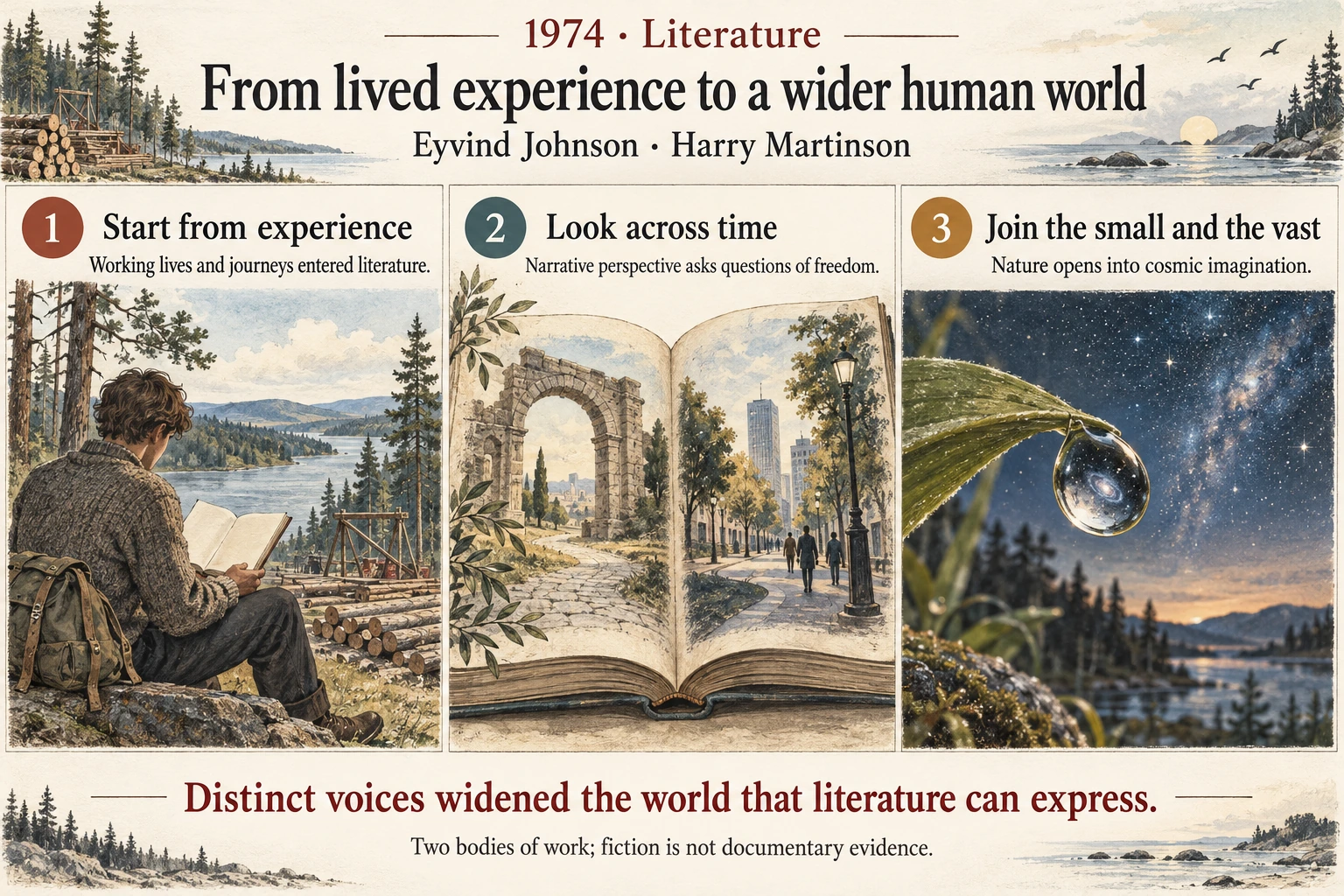
Johnson transformed memories of working-class youth into fiction, then widened his perspective across Europe and historical periods. The Olof novels drew on a young worker’s experience; the wartime Krilon trilogy challenged coercion through allegory. Historical novels such as The Days of His Grace examined power and moral choice in settings distant from the present, while making their dilemmas recognisable. Historical distance became a way to question the reader’s own time.
Martinson’s prose and poetry drew on unsettled childhood, seafaring, wandering and careful attention to the natural world. Small observed details could open into reflections on existence and responsibility. In Aniara, an imagined space voyage loses its direction, bringing technological ambition and human vulnerability into a larger perspective. These are literary transformations of experience, not transcripts of every episode in the authors’ lives. Their works differ in form and emphasis; the prize did not recognise a book they wrote together.
Why it matters
The writers expanded the experiences and questions that Swedish literature could express. The award recognised individual bodies of work whose attention to freedom, nature and human life extended beyond their social origins. Readers can approach the novels and poems as distinct encounters rather than a single lesson.