c.curionodeThe Nobel Archive

2022 · Economic Sciences

Why a bank can be useful—and fragile

Research explained how banks turn savings into investment, why runs happen and why banking collapses can deepen a crisis.

The Sveriges Riksbank Prize in Economic Sciences in Memory of Alfred Nobel.

BanksLiquidityFinancial crises
2022Economic Sciences

Visual guide

The prize, pictured

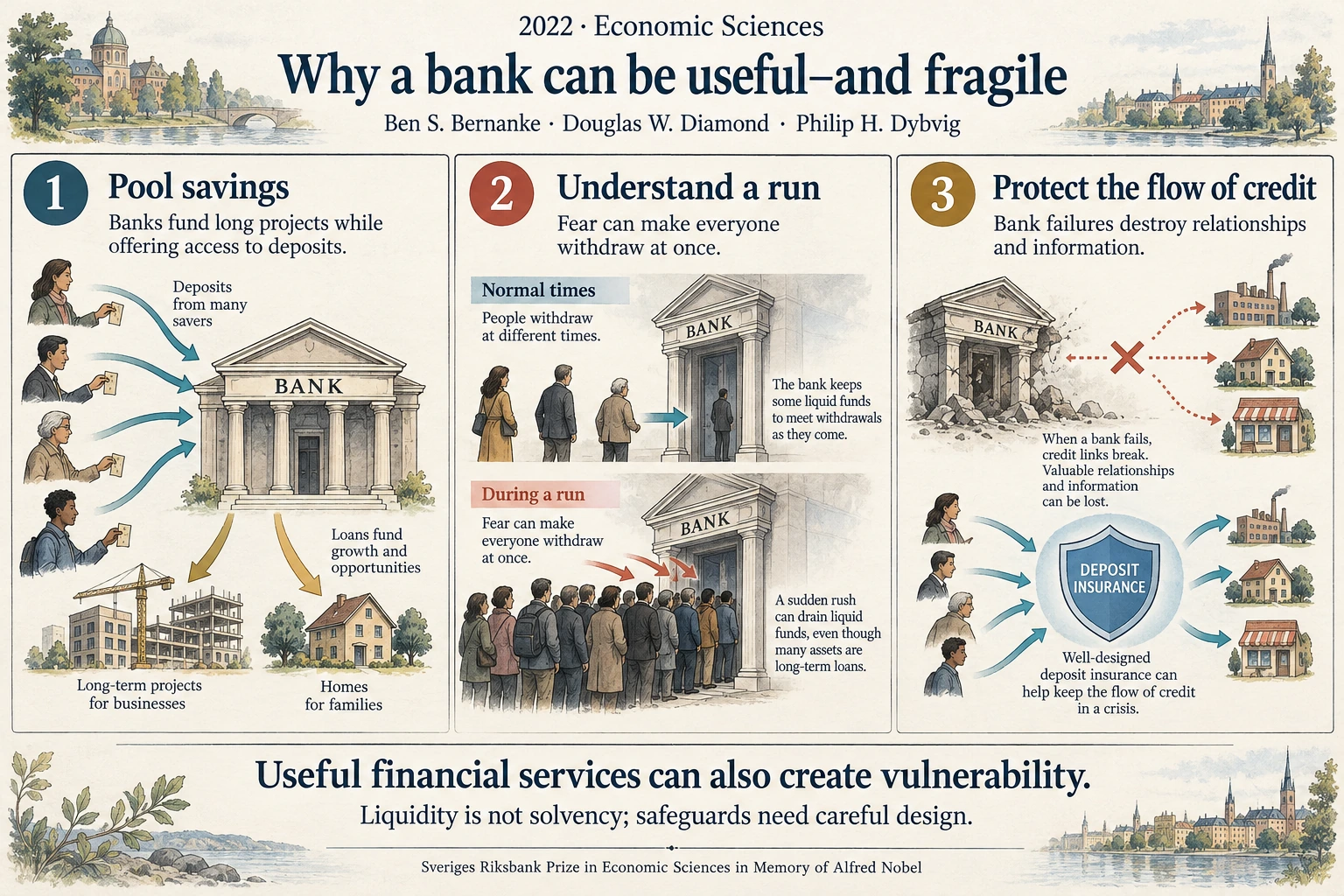
Infographic explaining Why a bank can be useful—and fragile
Original AI-generated infographic. A conceptual overview; the explanations and sources below provide context.
Read the poster text

Useful financial services can also create vulnerability.

  1. Pool savings

    Banks fund long projects while offering access to deposits.

  2. Understand a run

    Fear can make everyone withdraw at once.

  3. Protect the flow of credit

    Bank failures destroy relationships and information.

Liquidity is not solvency; safeguards need careful design.

01 · The discovery

The idea, in everyday language

Savers may need their money tomorrow, while a borrower may need years to repay a loan. Diamond and Dybvig showed how pooling many deposits allows a bank to offer access to savings while financing longer projects. But if everyone expects others to withdraw, a rush for cash can become self-fulfilling.

Diamond also explained the value of banks monitoring borrowers on behalf of savers. Bernanke’s research on the Great Depression showed how bank collapses destroy lending relationships and information, restricting credit and worsening the wider downturn.

Why it matters

The work gives a framework for understanding bank runs, deposit insurance and the importance of preserving the flow of credit. It helps explain why financial disruption can affect jobs and investment far beyond a bank’s own customers.
02 · The people

Who brought the idea to life?

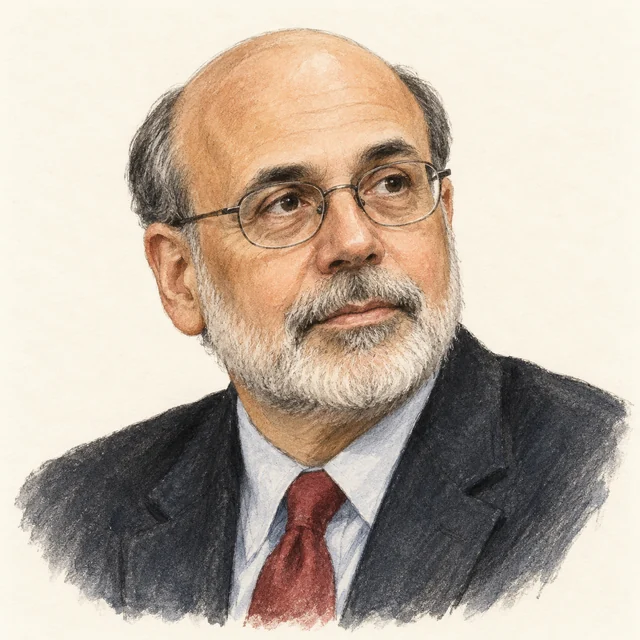
Illustrated portrait of Ben S. Bernanke

Ben S. Bernanke

Prize share · 1/3

His 1983 analysis of the Great Depression showed how bank failures damaged the ability to connect borrowers with credit. Losing banks meant losing relationships and information, helping explain why the downturn became so deep and persistent.

Read the biography ↗
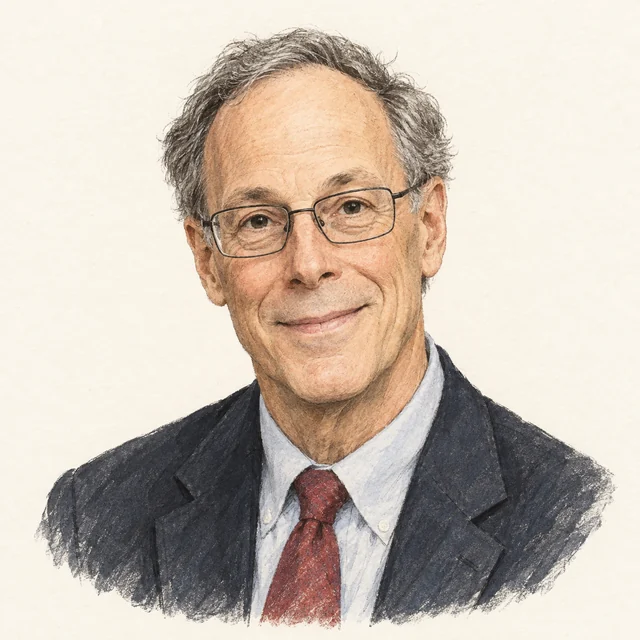
Illustrated portrait of Douglas W. Diamond

Douglas W. Diamond

Prize share · 1/3

With Dybvig, he explained how banks reconcile depositors’ demand for ready access to money with borrowers’ need for long-term funding. His separate work showed why delegating borrower monitoring to a bank can save resources.

Read the biography ↗
Illustrated portrait of Philip H. Dybvig

Philip H. Dybvig

Prize share · 1/3

The Diamond–Dybvig model showed that a useful bank can still be vulnerable if depositors expect others to withdraw at once. It also explained how appropriately designed deposit insurance can remove the incentive to join a panic.

Read the biography ↗

03 · Years in the making

The path here

  1. 1983

    Diamond and Dybvig publish their model of liquidity provision and bank runs.

  2. 1983

    Bernanke explains how disrupted credit intermediation deepened the Great Depression.

  3. 1984

    Diamond develops a theory of banks as delegated monitors of borrowers.

04 · Read further

From the original sources

Original explanations by Curionode, based on the official records below. Biographical details and affiliations refer to the award year.

  1. Official award announcement nobelprize.org
  2. Nobel Committee’s accessible background nobelprize.org

More in Economic Sciences

Browse this subject ↗