A life in context
The person behind the prize
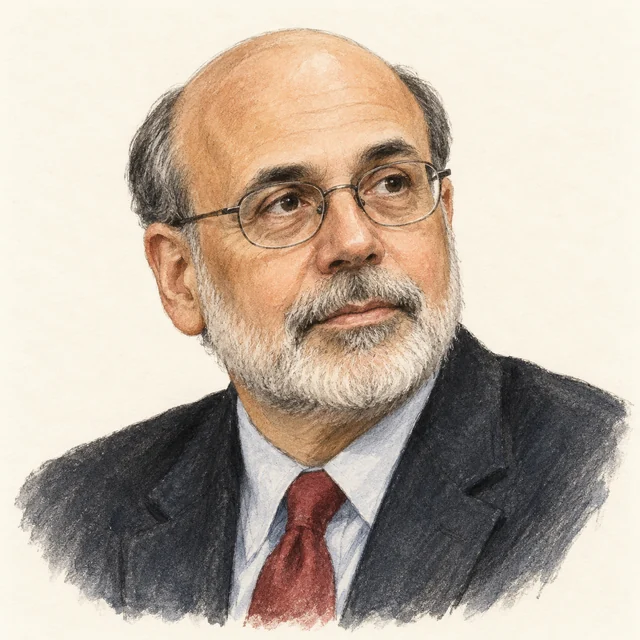
Bernanke earned his doctorate at MIT in 1979 and taught economics before serving in public institutions, including as chair of the US Federal Reserve. At the award he was a researcher at the Brookings Institution. The prize recognised his earlier research on banking crises, rather than an assessment of all his later policy decisions.
The contribution
His 1983 analysis of the Great Depression showed how bank failures damaged the ability to connect borrowers with credit. Losing banks meant losing relationships and information, helping explain why the downturn became so deep and persistent.
The idea in plain language
Savers may need their money tomorrow, while a borrower may need years to repay a loan. Diamond and Dybvig showed how pooling many deposits allows a bank to offer access to savings while financing longer projects. But if everyone expects others to withdraw, a rush for cash can become self-fulfilling.
Read the full award story ↗