A life in context
The person behind the prize
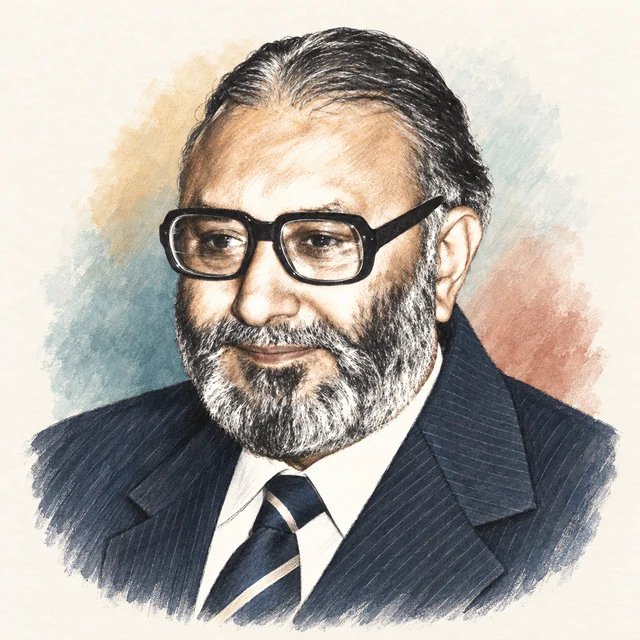
Salam studied at Government College in Lahore and at Cambridge, developing early work in quantum electrodynamics. He returned to Pakistan in 1951 to teach, but isolation from an active research community made sustained theoretical work difficult. He returned to Cambridge in 1954 and became a professor at Imperial College in 1957. His research on gauge theories, including collaboration with John Ward, helped lead to an electroweak formulation using spontaneous symmetry breaking. Alongside this scientific work, he helped establish the International Centre for Theoretical Physics in Trieste in 1964. Its visiting arrangements enabled researchers from developing countries to renew scientific contacts while maintaining careers at home.
The contribution
Salam independently developed an electroweak theory incorporating spontaneous symmetry breaking, allowing massive weak carriers and a massless photon within a shared framework. He received one third of the Physics Prize. Building international research opportunities was a separate, enduring part of his career.
The idea in plain language
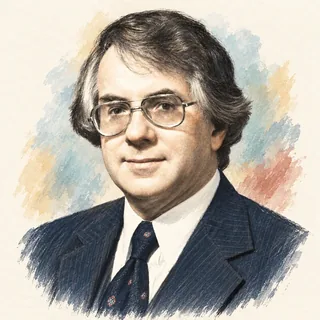
Electromagnetism has a massless carrier, the photon, while weak interactions have massive carriers and a much shorter range. Glashow’s early gauge model included both charged and neutral weak interactions. Weinberg and Salam independently incorporated spontaneous symmetry breaking, which allows the weak carriers to have mass while the photon remains massless. A shared underlying framework can therefore produce quite different observed behaviour.
Read the full award story ↗