A life in context
The person behind the prize
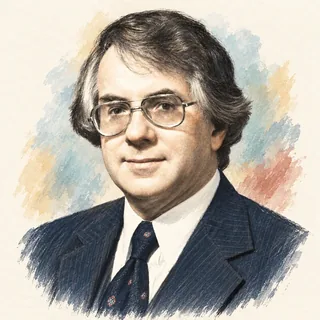
Weinberg studied at Cornell and Copenhagen before completing a Princeton doctorate in 1957 with Sam Treiman. Work at Columbia and Berkeley ranged across scattering, symmetries and particle theory; he also developed a lasting interest in cosmology. While visiting MIT in 1967, he applied spontaneous symmetry breaking to a unified description of weak and electromagnetic interactions. It offered a way to reconcile massive weak carriers with a massless photon. He joined Harvard in 1973, the institution listed for his 1979 award, and moved to the University of Texas at Austin in 1982. His books brought particle physics and the early universe to wider audiences alongside his technical research.
The contribution
Weinberg formulated an electroweak model in 1967 incorporating symmetry breaking and predicting neutral weak processes. He received one third of the Physics Prize. Later proofs of calculational consistency and experimental evidence were essential to establishing the theory.
The idea in plain language
Electromagnetism has a massless carrier, the photon, while weak interactions have massive carriers and a much shorter range. Glashow’s early gauge model included both charged and neutral weak interactions. Weinberg and Salam independently incorporated spontaneous symmetry breaking, which allows the weak carriers to have mass while the photon remains massless. A shared underlying framework can therefore produce quite different observed behaviour.
Read the full award story ↗