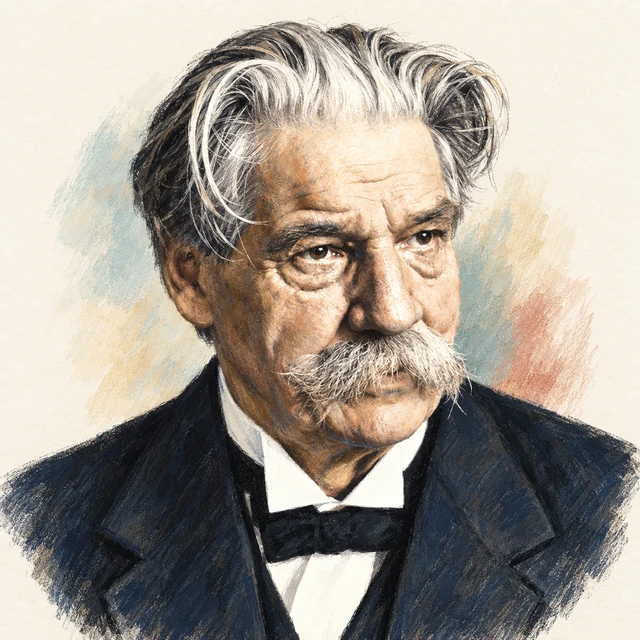
A life in context
The person behind the prize
Schweitzer combined theology, philosophy and music before studying medicine. At Strasbourg he completed a philosophy doctorate in 1899 and a theology qualification in 1900; medical studies begun in 1905 led to his medical degree in 1913. That year he and his wife Hélène began hospital work at Lambaréné, then under French colonial rule, with local assistance including Joseph’s interpreting work. Wartime internment interrupted their work; Schweitzer returned in 1924. Concerts, writing and donations helped support the hospital. His ethic of reverence for life linked responsibility toward living beings with practical service. The 1952 Peace Prize was initially reserved and presented on 10 December 1953. Unable to leave the hospital, he was represented by the French ambassador, who read his acceptance message. Later antinuclear campaigning belongs to subsequent history. Understanding the hospital requires attention to its staff, patients and colonial setting as well as to its founder.
The contribution
Schweitzer was recognised for humanitarian work and an ethic of reverence for life. The full 1952 Peace Prize was presented in 1953, with acceptance read on his behalf.
The idea in plain language
How can concern for suffering become sustained practical work? Schweitzer connected his ethical and religious thought with medical service at Lambaréné, where he and Hélène began hospital work in 1913. Local assistance, including Joseph’s interpreting, staff, supplies, fundraising and patients’ own participation were essential to the institution.
Read the full award story ↗

