c.curionodeThe Nobel Archive

1952 · Peace

Make responsibility toward life a practical commitment

Schweitzer’s humanitarian hospital work and ethic of reverence for life were recognised by the reserved 1952 Peace Prize, presented in 1953.

Reverence for lifeHumanitarian serviceSustained responsibility
1952Peace

Visual guide

The prize, pictured

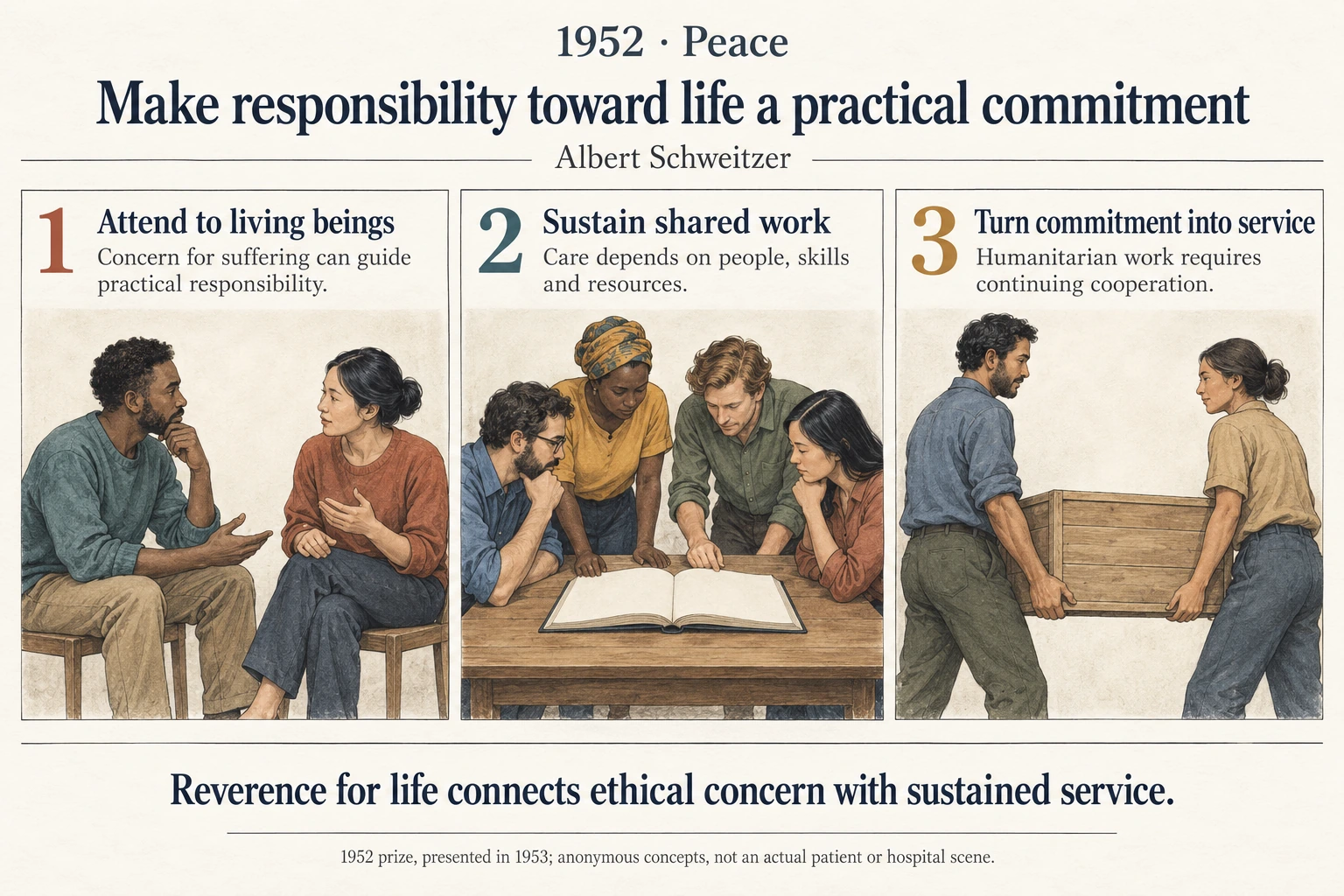
Infographic explaining Make responsibility toward life a practical commitment
Original AI-generated infographic. A conceptual overview; the explanations and sources below provide context.
Read the poster text

Reverence for life connects ethical concern with sustained service.

  1. Attend to living beings

    Concern for suffering can guide practical responsibility.

  2. Sustain shared work

    Care depends on people, skills and resources.

  3. Turn commitment into service

    Humanitarian work requires continuing cooperation.

1952 prize, presented in 1953; anonymous concepts, not an actual patient or hospital scene.

01 · The contribution

The idea, in everyday language

How can concern for suffering become sustained practical work? Schweitzer connected his ethical and religious thought with medical service at Lambaréné, where he and Hélène began hospital work in 1913. Local assistance, including Joseph’s interpreting, staff, supplies, fundraising and patients’ own participation were essential to the institution.

His idea of reverence for life called for responsibility toward living beings rather than indifference to suffering. Concerts, books and international donations supported the hospital. The prize for 1952 was initially reserved and was presented on 10 December 1953, when the French ambassador accepted on his behalf and read his message. It remains the 1952 prize, separate from Marshall’s 1953 award.

Why it matters

The recognition drew international attention to an ethic expressed through service and to the resources needed for humanitarian work. The prize money helped support a separate accommodation project for people affected by leprosy. Later campaigning against nuclear weapons was a subsequent part of Schweitzer’s public life, not the original basis of the 1952 award.
02 · The people

Who brought the idea to life?

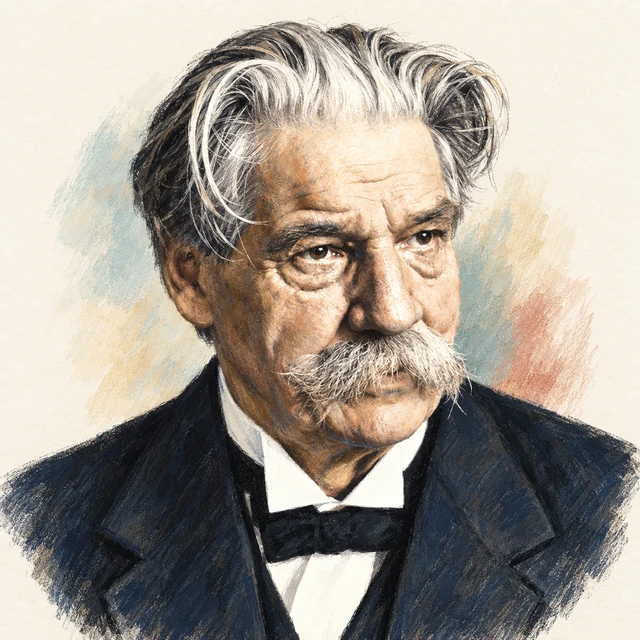
Illustrated portrait of Albert Schweitzer

Albert Schweitzer

Prize share · 1

Schweitzer was recognised for humanitarian work and an ethic of reverence for life. The full 1952 Peace Prize was presented in 1953, with acceptance read on his behalf.

Read the biography ↗

03 · Years in the making

The path here

  1. 1875

    Schweitzer is born in Kaysersberg.

  2. 1899

    He completes his philosophy doctorate at Strasbourg.

  3. 1905

    He begins medical studies.

  4. 1913

    He qualifies in medicine and begins hospital work at Lambaréné with Hélène.

  5. 1917

    Wartime internment interrupts the work.

  6. 1924

    He returns to Lambaréné.

  7. 1952

    The Peace Prize for this year is initially reserved.

  8. 1953

    The prize is presented on 10 December, with acceptance on his behalf.

04 · Read further

From the original sources

Original explanations by Curionode, based on the official records below. Biographical details and affiliations refer to the award year.

  1. Official award summary nobelprize.org
  2. Award ceremony speech nobelprize.org
  3. Maison Albert Schweitzer: the hospital’s shared beginnings schweitzer.org
  4. Official acceptance read in 1953 nobelprize.org
  5. Official biography: Albert Schweitzer nobelprize.org