c.curionodeThe Nobel Archive

1954 · Peace

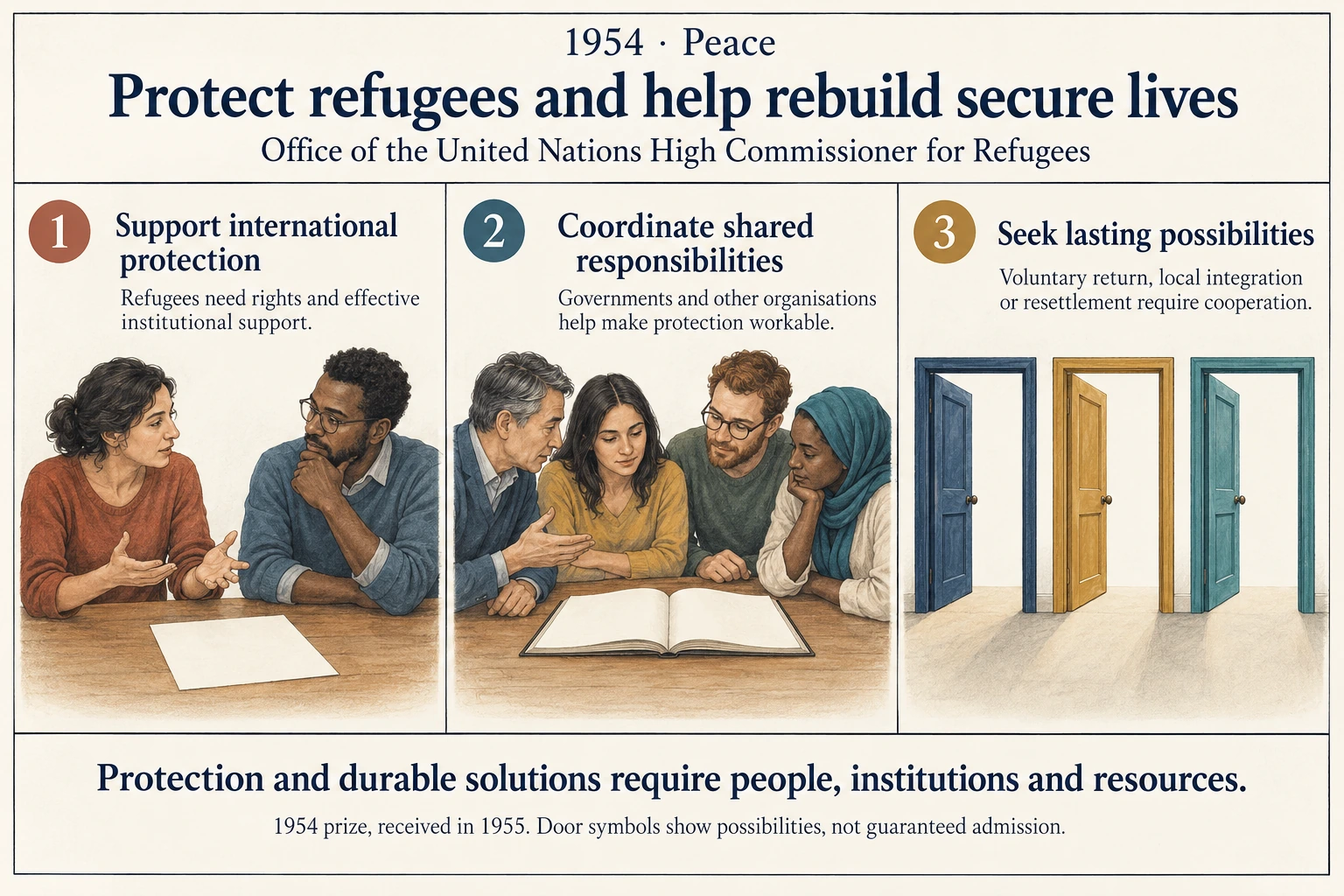
Protect refugees and help rebuild secure lives

UNHCR was recognised for helping and protecting refugees after war. The reserved 1954 prize was received in 1955.

Refugee protectionInternational cooperationLasting solutions
1954Peace

Visual guide

The prize, pictured

Infographic explaining Protect refugees and help rebuild secure lives
Original AI-generated infographic. A conceptual overview; the explanations and sources below provide context.
Read the poster text

Protection and durable solutions require people, institutions and resources.

  1. Support international protection

    Refugees need rights and effective institutional support.

  2. Coordinate shared responsibilities

    Governments and other organisations help make protection workable.

  3. Seek lasting possibilities

    Voluntary return, local integration or resettlement require cooperation.

1954 prize, received in 1955. Door symbols show possibilities, not guaranteed admission.

01 · The contribution

The idea, in everyday language

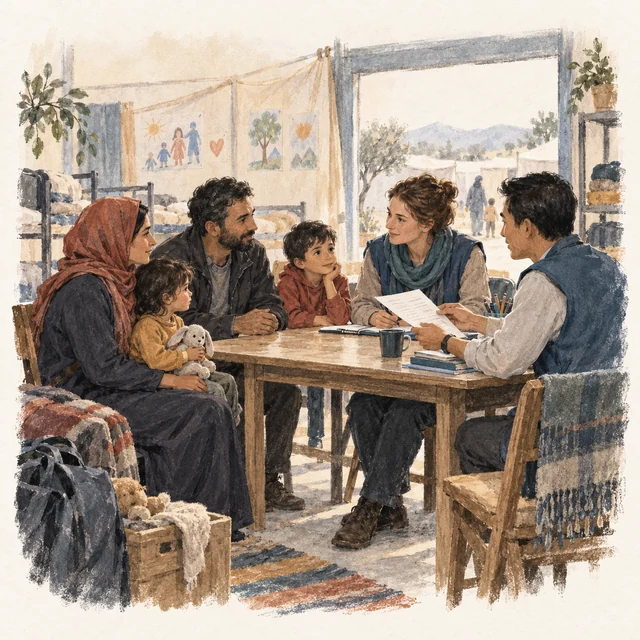
What happens when people displaced by war cannot safely return or obtain effective protection? UNHCR began work in 1951 after the United Nations adopted its statute in December 1950. Its early mandate combined international protection with cooperation toward lasting solutions. The 1951 Refugee Convention supplied an important legal framework, while host governments and voluntary organisations had essential roles.

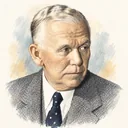
The office worked to improve protection and promote opportunities for voluntary repatriation, integration where refugees lived, or resettlement elsewhere. Limited resources and government decisions constrained what could be achieved. The Nobel recognition drew attention both to the humanitarian work and to the need for financial support. The prize belonged to the institution, rather than High Commissioner van Heuven Goedhart personally. It was initially reserved in 1954 and received in 1955, remaining the 1954 Peace Prize.

Why it matters

International protection and lasting solutions connect recovery after war with conditions for peace. The work was shared with states and other organisations; UNHCR could not independently grant every right or guarantee a home. Its later 1981 prize recognised a subsequent period of work.
02 · The recipients

Who brought the idea to life?

03 · Years in the making

The path here

  1. 1950

    The United Nations adopts UNHCR’s statute on 14 December.

  2. 1951

    The office begins work on 1 January; the Refugee Convention is adopted that year.

  3. 1954

    The Peace Prize for this year is initially reserved.

  4. 1955

    UNHCR receives the 1954 prize on 10 December.

  5. 1981

    The institution receives a second Peace Prize for later work.

04 · Read further

From the original sources

Original explanations by Curionode, based on the official records below. Biographical details and affiliations refer to the award year.

  1. Official award summary nobelprize.org
  2. Award ceremony speech nobelprize.org
  3. Official UNHCR institutional history nobelprize.org