A life in context
The person behind the prize
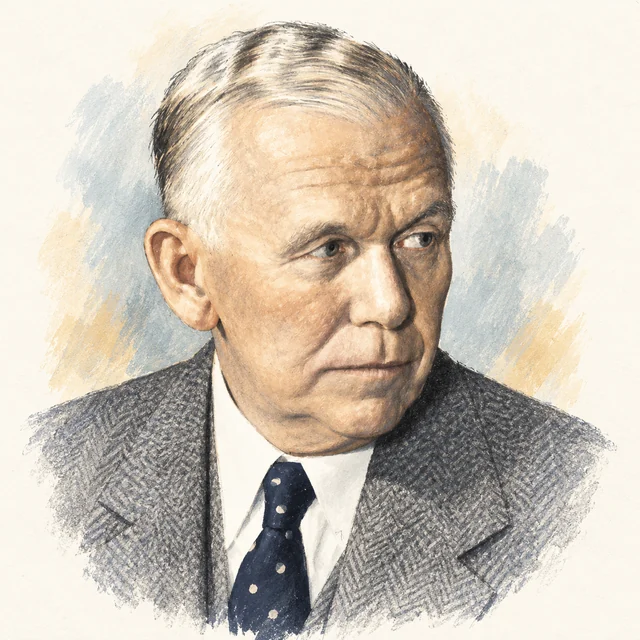
Marshall graduated from the Virginia Military Institute in 1901 and pursued a professional army career. Service in the Philippines, further military education, staff work and service in China preceded his appointment as Army Chief of Staff in 1939. He held that post through 1945, organising and coordinating the army during the Second World War. As Secretary of State from 1947 to 1949, he promoted international cooperation for European recovery. His Harvard address on 5 June 1947 called for a programme shaped with European participation; the European Recovery Program began in 1948 with support from the Truman administration and Congress. Marshall later served as Secretary of Defense from 1950 to 1951. He had left those offices by the full 1953 Peace Prize. The recognition concerned postwar recovery and international cooperation, rather than an award for wartime military command or a claim that one individual rebuilt Europe.
The contribution
Marshall promoted European economic recovery and international cooperation through the initiative associated with the Marshall Plan. He received the full Peace Prize.
The idea in plain language
The end of fighting did not restore functioning economies. Damaged infrastructure, shortages, disrupted trade and weak confidence obstructed recovery. Marshall’s Harvard address on 5 June 1947 called for a coordinated European programme with American assistance, rather than a series of isolated emergency responses.
Read the full award story ↗

