c.curionodeThe Nobel Archive

1953 · Peace

Support recovery through international cooperation

Marshall’s promotion of European economic recovery connected postwar reconstruction with conditions for peace.

European recoveryInternational cooperationPostwar reconstruction
1953Peace

Visual guide

The prize, pictured

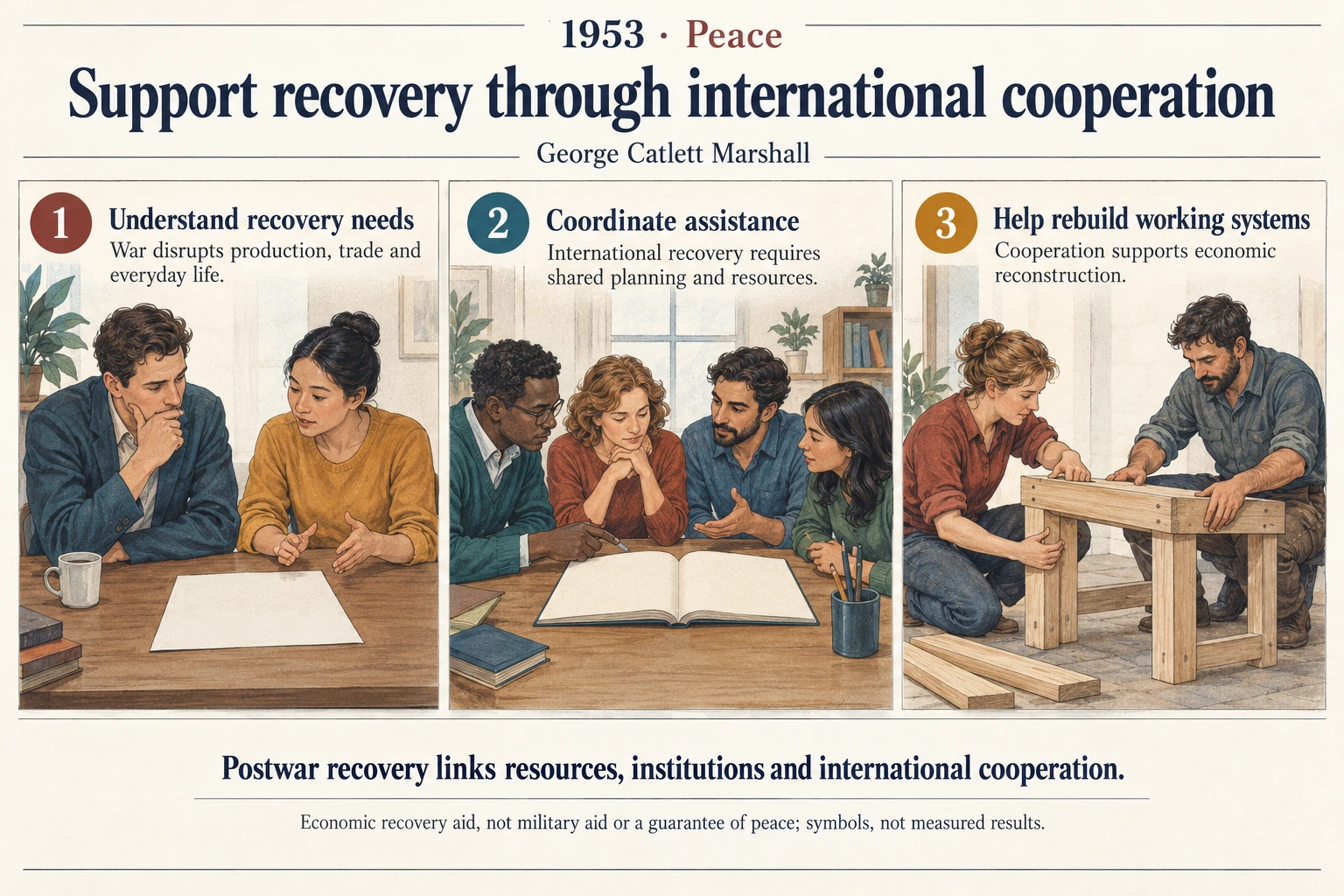
Infographic explaining Support recovery through international cooperation
Original AI-generated infographic. A conceptual overview; the explanations and sources below provide context.
Read the poster text

Postwar recovery links resources, institutions and international cooperation.

  1. Understand recovery needs

    War disrupts production, trade and everyday life.

  2. Coordinate assistance

    International recovery requires shared planning and resources.

  3. Help rebuild working systems

    Cooperation supports economic reconstruction.

Economic recovery aid, not military aid or a guarantee of peace; symbols, not measured results.

01 · The contribution

The idea, in everyday language

The end of fighting did not restore functioning economies. Damaged infrastructure, shortages, disrupted trade and weak confidence obstructed recovery. Marshall’s Harvard address on 5 June 1947 called for a coordinated European programme with American assistance, rather than a series of isolated emergency responses.

The European Recovery Program began in 1948, supported by the Truman administration and Congress and implemented with European governments and institutions. It provided resources for recovery and encouraged cooperation. The full 1953 Peace Prize recognised Marshall’s postwar initiative and work for international understanding, rather than his wartime military command.

Why it matters

Economic recovery can reduce hardship and help create conditions for stable cooperation. The programme became a major example of international reconstruction assistance. Europeans’ own work, national policies and wider developments also shaped recovery; the contribution of aid cannot be reduced to a single undisputed causal measure.

02 · The people

Who brought the idea to life?

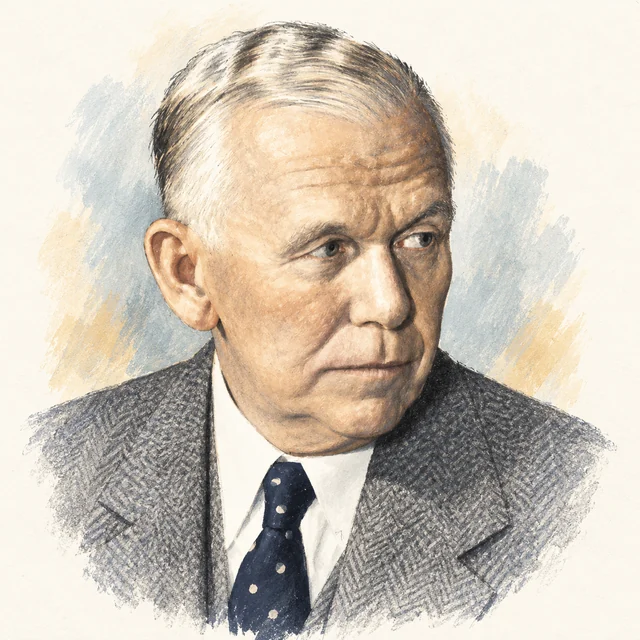
Illustrated portrait of George Catlett Marshall

George Catlett Marshall

Prize share · 1

Marshall promoted European economic recovery and international cooperation through the initiative associated with the Marshall Plan. He received the full Peace Prize.

Read the biography ↗

03 · Years in the making

The path here

  1. 1880

    Marshall is born in Uniontown.

  2. 1901

    He graduates from the Virginia Military Institute.

  3. 1939–1945

    He serves as US Army Chief of Staff.

  4. 1947

    As Secretary of State, he proposes coordinated recovery at Harvard on 5 June.

  5. 1948

    Truman signs the recovery legislation on 3 April.

  6. 1950–1951

    Marshall serves as Secretary of Defense.

  7. 1953

    He receives the full Peace Prize after leaving those offices.

04 · Read further

From the original sources

Original explanations by Curionode, based on the official records below. Biographical details and affiliations refer to the award year.

  1. Official award summary nobelprize.org
  2. Award ceremony speech nobelprize.org
  3. Office of the Historian: Marshall Plan context history.state.gov
  4. National Archives: recovery legislation and original address archives.gov
  5. Official biography: George Catlett Marshall nobelprize.org